Póngase en contacto con nosotros
- RM901 No.22 Tangjiaqiao Road Wenzhou China
- +86 138 1973 9327
- mailto:[email protected]
- https://www.autosparesupplier.com/
Compartir
Table of Contents
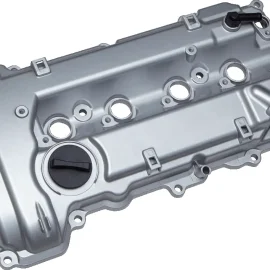
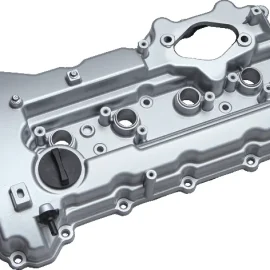
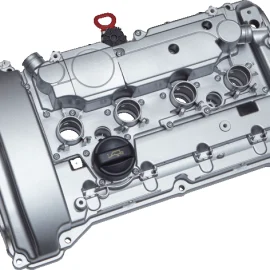
If you notice oily residue around the top of your engine, a fuga en la junta de la tapa de la válvula is one of the most likely causes. The valve cover gasket sits between the tapa de válvulas del motor and the cylinder head, sealing engine oil inside the top end of the engine. After years of heat and pressure it hardens, cracks and starts to seep.
Minor seepage is rarely an emergency, but active dripping should be fixed quickly — a neglected valve cover gasket leaking oil can foul spark plugs, stain the exhaust and, in the worst case, starve the engine of lubricating oil. This guide explains why these gaskets leak, how urgent the repair really is, and what happens if you keep driving.
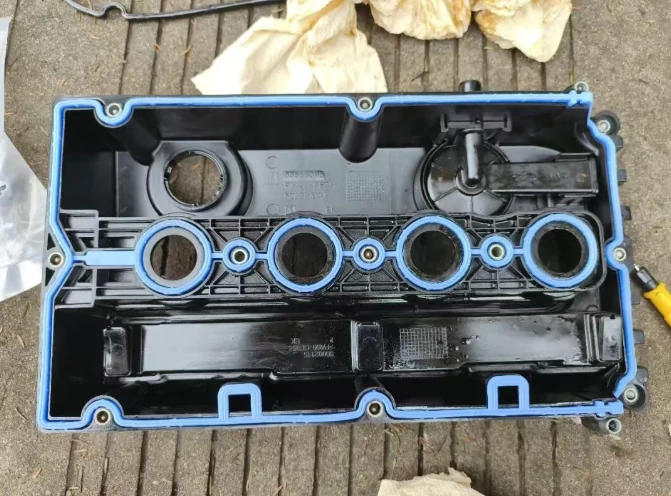
The valve cover seals the top of the cylinder head and keeps oil around the camshafts and valves, which are splash-lubricated. The gasket is the flexible layer between the cover and the head — on most engines it also seals the spark plug tube wells, so one gasket has to hold several sealing points at the same time.
For a deeper breakdown of the part itself, see our guide to the function of the engine valve cover gasket, and this overview of what an engine valve cover does.
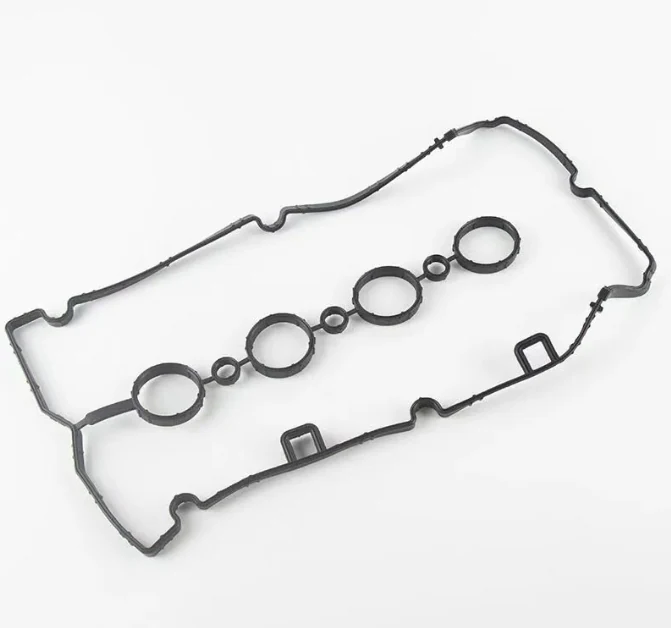
A valve cover gasket does not fail for one dramatic reason. It leaks because four slow forces work against it at the same time, and on engines driven past seven or eight years they usually win.
Most valve cover gaskets are moulded from nitrile or silicone rubber into a complex profile that wraps around the cover and the spark plug wells. The top of the engine is one of its hottest zones, and rubber that lives at 200 °C-plus metal temperatures slowly loses its elasticisers. The gasket turns stiff and brittle, develops hairline cracks, and the clamping force it can exert drops. On many engines this shows up somewhere between 60,000 and 100,000 miles.
Every drive is a heat cycle: cold start, warm-up, full operating temperature, cool-down. The aluminium head and the valve cover expand and contract at different rates, and the gasket is caught in between. Thousands of these cycles gradually work the seal loose, which is why leaks often appear at the corners and around the spark plug wells first.
The engine is not sealed — blow-by gases and oil mist build pressure inside the crankcase, and the positive crankcase ventilation (PCV) system is meant to relieve it. When a gasket has already lost part of its sealing force, this constant internal push weeps oil past the seal. A clogged PCV valve makes the problem worse, so it is worth checking whenever a leak is diagnosed.
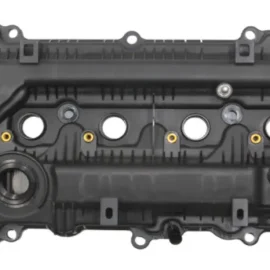
On many modern engines the valve cover itself is plastic. Plastic covers resist corrosion and save weight, but years of baking under the camshaft cover slowly warp or cup the sealing surface. Once the flange is no longer flat, even a brand-new gasket cannot clamp evenly and the leak returns. If your cover is plastic, our plastic vs aluminum valve cover comparison explains when replacement beats another gasket.
It depends on how much it leaks. A light film of oil mixed with dust around the gasket line — with no visible drips — can be monitored. Check the oil level monthly and keep an eye on whether the film grows.
Fix it promptly when any of these appear:
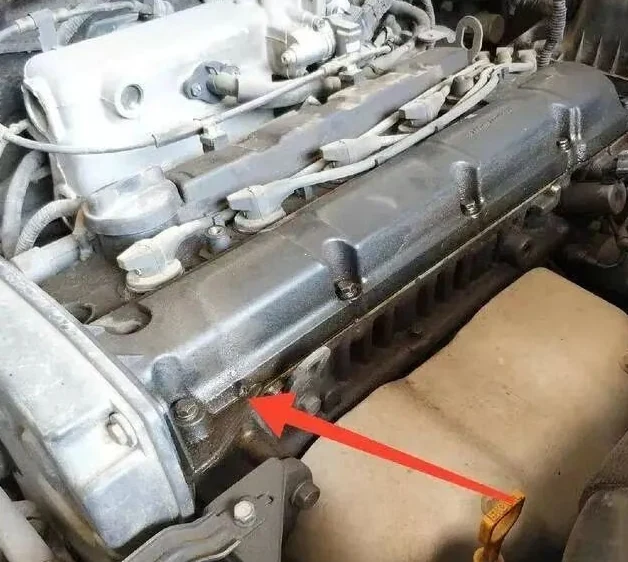
A valve cover gasket leak is not a repair-bay emergency on day one, but the consequences compound quietly. This is how a small seep turns into a chain of expensive problems:
| Síntoma | What Is Happening | Risk If Ignored |
|---|---|---|
| Oily, dirty engine top | Oil mixes with dust and grime around the cover | Hides other leaks; grime can trap heat around the valvetrain |
| Burning smell or smoke | Oil drips onto the hot exhaust manifold | Strong smell in the cabin; fire risk in severe cases |
| Misfire or rough idle | Oil floods the spark plug wells | Fouled plugs and ignition coils, random misfire codes |
| Low oil level | Oil is lost through the seal faster than normal use | Lubrication failure — the most expensive outcome |
The good news: this is one of the cheaper top-end repairs. The gasket itself typically costs a few tens of dollars, while labour makes up most of the bill — engines where the cover sits under intake plumbing or ignition coils take longer, so V6 and V8 layouts cost more than an inline-four. For real-world figures across different countries and vehicle classes, see our full coste de sustitución de la junta de la tapa de la válvula breakdown. Paying it on time is far cheaper than the spark plugs, coils or engine damage a long-neglected leak can cause.
For the full repair walkthrough, our 5 steps for a valve cover gasket leak guide covers spotting, confirming and replacing the gasket.
Short distances are usually survivable if the leak is a light seep and the oil level is topped up, but it should not be ignored. Keep the level in range, avoid letting oil contact the exhaust, and book the repair — active dripping means the car should not be driven until fixed.
Typically the life of the gasket matches the heat exposure of the engine — often well past 100,000 km on a healthy engine, but hard-driven engines in hot climates can need one much earlier. Heat, not mileage alone, is what ages the rubber.
No. Seal-swelling additives are a temporary masking trick at best. They do not restore a cracked gasket, and they can swell other seals in the engine. Replacing the gasket is the real fix.
If the cover is metal and flat, a new gasket is enough. If it is plastic and warped or cracked around the spark plug wells, replacing the cover together with the gasket stops the leak from returning within months.