
Why is Improved Valve Cover Ventilation Vital For Race Cars?
Aplicación de improved valve cover ventilation prevents catastrophic engine failure and maximizes horsepower on the racetrack.High-performance race cars generate extreme internal pressures constantly during competition.The stock intake system cannot safely handle this level of high-intensity stress,so professional racers must upgrade their intake systems immediately before track days.
The Mechanics Behind Improved Valve Cover Ventilation
During high-speed racing,combustion gases force their way past the piston rings into the crankcase.Engineers call this phenomenon engine blow-by.If these gases stay trapped,internal pressure builds up incredibly fast.High pressure resists the downward movement of the pistons naturally.Your racing engine loses valuable horsepower and efficiency instantly.
Let us look closer at the physics of engine vacuum.When pistons travel downward,they compress air inside the crankcase assembly.Without improved valve cover ventilation,this air resistance slows down the crankshaft rotation.This parasitic power loss drains engine efficiency quietly but severely.
Furthermore,hot blow-by gases raise the internal oil temperature quickly.Hot,thin oil cannot protect high-rpm camshaft lobes effectively.Improved valve cover ventilation acts as a critical cooling mechanism too.It pulls fresh air through the engine block to regulate internal temperatures safely.
System Comparison: Factory vs. Racing Ventilation Layouts
| Design Feature | Factory PCV Setup | Upgraded Racing Ventilation |
|---|---|---|
| Flow Capacity | Very Low (Restricted) | Extremely High (Free Flowing) |
| Pressure Management | Fails under high RPM | Maintains safe vacuum levels |
| Oil Separation | Basic internal baffle | Multi-stage external catch can |
| Track Safety | High risk of oil spray | Secure containment loop |
Obtenga un presupuesto ahora
High Blow-by in High-RPM Racing Engines
Race engines run at high revolutions per minute for extended periods.This intense operational load increases blow-by volume exponentially compared to street cars.Standard PCV valves simply cannot flow enough volume to relieve this massive gas buildup.Instead,the heavy oil mist contaminates the intake stream quickly.
This contamination lowers the effective octane rating of your fuel dangerously.Consequently,your engine might experience severe detonation or knocking on the track.You must manage this heavy gas volume with a dedicated ventilation layout.Proper management ensures clean combustion and steady power output always.
Turbocharged and supercharged racing engines experience double the blow-by pressure of standard engines.Forced induction pushes extreme air volume into the cylinders aggressively.A large portion escapes past the rings under maximum boost pressure.
If your vehicle lacks improved valve cover ventilation,the dipstick will literally blow out of its tube.Oil will spray everywhere across the engine bay instantly.This creates a massive safety hazard for track corner marshals.High-boost applications demand improved engine valve cover ventilation immediately.You cannot safely track a forced-induction car without custom modifications.
Crankcase Pressure Impacts on Engine Performance
| Crankcase Pressure Level | Impact on Piston Movement | Horsepower Output Trend | Oil Leak Risk |
|---|---|---|---|
| 0 to 1 PSI (Healthy Racing) | Smooth Rotation | Maximum Power Achieved | Extremadamente bajo |
| 3 to 5 PSI (Standard Street) | Light Resistance | Minor Power Loss | Low to Medium |
| 10+ PSI (Clogged / Factory) | Heavy Resistance | Severe Power Drop | 100% Gasket Failure |
Key Benefits of Improved Valve Cover Ventilation
High crankcase pressure forces motor oil past rubber gaskets aggressively.Improved valve cover ventilation stabilizes internal pressures completely.It prevents oil from spraying onto hot exhaust manifolds and causing dangerous track fires.
When pressure builds up,air bubbles mix into the engine oil pool.This aeration reduces the lubricating efficiency of the oil film dramatically.Improved engine valve cover ventilation keeps the oil pure and protects vital engine bearings perfectly.
Proper crankcase vacuum helps the piston rings seal tightly against cylinder walls.This improved seal maximizes compression and boosts overall engine torque significantly.
Racing fuels often create corrosive chemical byproducts during hot combustion cycles.A well-designed ventilation system quickly removes these toxic vapors from the cylinder head,thereby preventing internal rust and extending the life of the components.
Smart Solutions for Improved Valve Cover Ventilation
How do you implement improved valve cover ventilation on your race car safely today?First,replace your restrictive factory PCV valve with a high-flow catch can system.A dual-port oil catch can separates heavy oil mist from the air stream efficiently.Next,install larger AN lines directly onto your aluminum valve cover.For example,upgrading from AN-6 to AN-10 lines increases flow capacity tremendously.
Consider adding a specialized vacuum pump to pull crankcase gases out actively.This active extraction method provides the absolute best improved valve cover ventilation for professional drag racing.It ensures zero pressure buildup under maximum turbocharger boost levels.
Another excellent solution involves routing your ventilation lines directly into the exhaust collector pipe.Fabricators call this a crankcase evacuation system or pan evac setup.This clever design utilizes the venturi effect inside the exhaust stream to pull vacuum.As exhaust gases rush out,they create a strong natural suction inside the lines.
Consequently,this suction provides constant improved valve cover ventilation without heavy electric pumps.It functions beautifully at high engine speeds when blow-by reaches its peak.However,you must install high-quality check valves to prevent exhaust backfiring into the engine.This combination creates a highly reliable closed-loop system for amateur and professional racers alike.
Essential Upgrades for Professional Track Performance
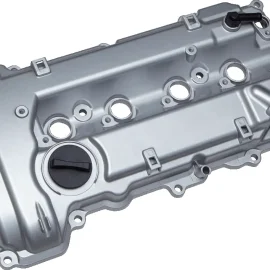
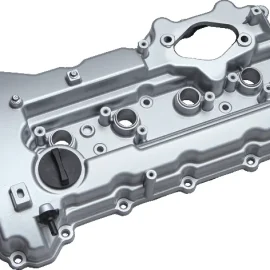
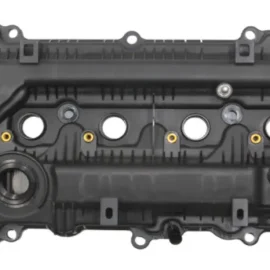
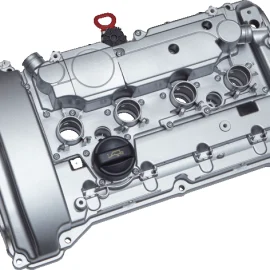
You must choose the right hardware materials for your custom track setup.Standard plastic components warp and crack easily under intense racing heat.Professional builders install billet aluminum valve covers with integrated internal baffles.These smart baffles trap liquid oil while allowing clean air to pass through freely.
Ensure your breather filters remain completely clean before every track event.Clogged breather filters restrict airflow and ruin your improved valve cover ventilation strategy completely.Regular inspection prevents simple maintenance oversights from destroying your expensive racing equipment.
Recommended Upgrades by Racing Type
| Racing Discipline | Recommended Line Size | Primary Ventilation Component | Main Performance Benefit |
|---|---|---|---|
| Autocross / Circuit | AN-10 Lines | Dual-Port Catch Can | Prevents Oil Slosh Leaks |
| Drag Racing | AN-12 Lines | Mechanical Vacuum Pump | Maximizes Ring Seal and HP |
| Endurance Racing | AN-10 Lines | Heated Breather System | Eliminates Moisture Sludge |
Maintaining the Ventilation System Cycle
A successful racing program requires continuous monitoring of your custom ventilation hardware.After every race,you must drain the collected oil from your catch can completely.Inspect the drained fluid carefully for any signs of excessive metal copper flakes.This fluid analysis provides an early warning sign of internal bearing wear.
Verify that all silicone hoses remain tightly clamped to their metal fittings.Loose hoses create dangerous vacuum leaks that disrupt engine tuning parameters.Maintaining your improved valve cover ventilation ensures your race car stays highly competitive all season.It forms a complete closed loop of protection for your high-performance vehicle.
Póngase en contacto con nosotros
- RM901 No.22 Tangjiaqiao Road Wenzhou China
- +86 138 1973 9327
- mailto:[email protected]
- https://www.autosparesupplier.com/