
How To Detect Microscopic Cracks in Valve Covers?
You must learn how to detect microscopic cracks in valve covers to prevent oil leaks and fires.Many car owners struggle with oily smells even when the engine looks clean.This problem often occurs because hairline fractures remain hidden from human sight.These tiny cracks can leak oil slowly under high pressure.Consequently,the oil drips onto hot engine parts and creates smoke or fire hazards.
Get A Quote Now
Why You Need to Detect Microscopic Cracks Early
Take action before minor cracks evolve into major structural failures.Your engine operates under extreme thermal stress every single day.As the metal or plastic expands and contracts,tiny flaws grow larger.If you ignore these signs,you risk losing engine oil rapidly.This can lead to internal engine damage or even a complete motor seizure.Furthermore,a small crack can cause vacuum leaks.These leaks disrupt the air-fuel ratio and cause poor engine performance.Therefore,early detection saves you thousands of dollars in repair costs.
Symptoms of Microscopic Cracks vs. Gasket Failure
| Symptom | Microscopic Crack | Gasket Failure |
|---|---|---|
| Location | Mid-body of the cover | Along the sealing edge |
| Leak Rate | Very slow seeping | Steady dripping |
| Visual Evidence | Often invisible | Visible oil sludge |
| Smell | Burning oil when hot | Constant oil odor |
| Impact | Vacuum leaks likely | Rare vacuum issues |
Common Symptoms in Faulty Valve Covers
Before attempting to conduct a detection,you should first look for specific warning signs.Firstly,check for “ghost leaks” that appear only after long drives.These leaks often evaporate before you can see them.Secondly,monitor your spark plug wells for oil accumulation.If oil pools around the plugs,it often indicates a crack in the inner galleries.Thirdly,listen for a subtle whistling sound while the engine idles.This noise suggests that air is entering through a tiny fracture in the valve covers.Addressing these symptoms early prevents more severe damage later.
The Role of Oil Residue
Look for dark,dusty patches on the surface of your valve covers. Dust sticks to wet oil films very easily.If you see a dirty spot that reappears after cleaning,a crack exists there.Even if the metal looks solid,the oil is pushing through the microscopic pores.Consequently,cleaning the engine regularly helps you spot these problem areas much faster.
How to Detect Microscopic Cracks Using Dye Penetrant
One of the most effective ways to detect microscopic cracks is the Liquid Penetrant Inspection (LPI).This method uses “capillary action” to reveal flaws that the human eye cannot see.You can purchase these kits at most high-end automotive supply stores.The process is simple,affordable,and highly accurate for metal components.
- Clean the Surface:Remove all oil and dirt from the valve covers using a strong degreaser.
- Apply Penetrant:Spray a bright red dye over the suspected area.
- Wait:Allow the dye to sit for about ten to fifteen minutes.
- Wipe Clean:Remove the excess dye from the surface with a lint-free cloth.
- Apply Developer:Spray a white powder developer over the area.
- Inspect:The red dye will “bleed” into the white powder,showing the exact crack location.
Comparison of Detection Methods
| Method | Accuracy | Cost | Best For |
|---|---|---|---|
| Visual Inspection | Very Low | Free | Finding large holes |
| Dye Penetrant | High | Low | Metal valve covers |
| UV Fluorescent | Very High | Medium | Finding active leaks |
| Pressure Testing | Excellent | High | Professional shops |
| Ultrasonic | Maximum | Very High | Precision engineering |
Why Plastic and Magnesium Valve Covers Fail
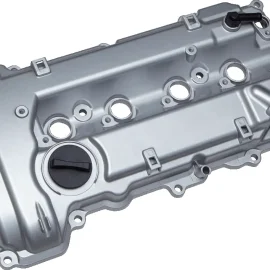
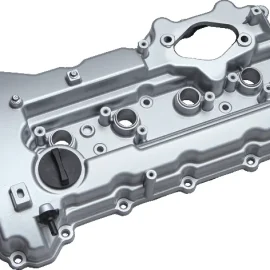
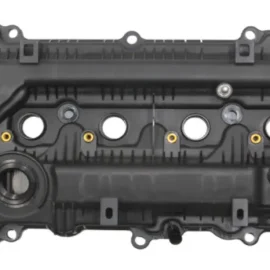
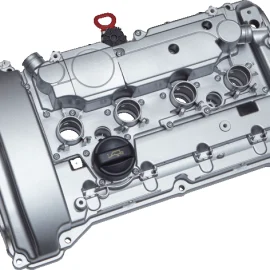
Modern manufacturers often use plastic or magnesium to save weight in valve covers.However,these materials are very susceptible to “stress cracking” over time.Heat cycles cause plastic to become brittle and eventually snap.Similarly,magnesium reacts with moisture and road salt,leading to internal oxidation.This oxidation creates internal pressure that forces the metal to crack from the inside out.Therefore,you must detect microscopic cracks more frequently in these specific materials.
The Problem with Overtightening
Many cracks actually start because of human error during maintenance.If you tighten the bolts too much,you create immense stress on the mounting holes.This stress slowly radiates outward through the material.Eventually,a hairline fracture develops near the bolt seat.Always use a calibrated torque wrench when installing valve covers to prevent this mechanical fatigue.
Professional Tools to Detect Microscopic Cracks
If DIY methods fail,professionals use UV light kits to detect microscopic cracks.They add a fluorescent dye to the engine oil and run the engine.Then,they use a high-intensity ultraviolet lamp to inspect the valve covers.The leaking oil glows brightly under the dark light.This method is excellent because it shows the leak happening in real-time.It reveals cracks that only open up when the engine is hot and vibrating.
Risk Factors for Crack Development
| Factor | Risk Level | Mitigation Strategy |
|---|---|---|
| Engine Overheating | Extreme | Improve cooling system |
| High Mileage | Moderate | Regular inspections |
| Cheap Replacements | High | Use Top-quality parts |
| Vibration | Moderate | Check engine mounts |
| Salt Exposure | High | Wash engine bay in winter |
Preventing Future Damage to Your Valve Covers
Once you successfully detect microscopic cracks,you must decide whether to repair or replace the part.For plastic valve covers,replacement is almost always the only safe option.However,for aluminum or magnesium,a professional welder might be able to fix the crack.After the repair,consider adding a ceramic coating to the component.This coating provides a thermal barrier that reduces heat stress.Furthermore,ensure your PCV (Positive Crankcase Ventilation) system is working correctly.A clogged PCV valve increases internal pressure,which forces oil through tiny weak spots.
Maintaining Proper Torque
As mentioned earlier,proper installation is the best prevention.Follow the manufacturer’s tightening sequence strictly.This ensures that the pressure is distributed evenly across the entire gasket surface.It prevents the corners from lifting or cracking under stress.Consequently,your valve covers will last much longer without developing invisible flaws.
Contact Us Now
- RM901 No.22 Tangjiaqiao Road Wenzhou China
- +86 138 1973 9327
- [email protected]
- https://www.autosparesupplier.com/