
K-STONE – Parking Air Conditioner Supplier in China

Table of Contents

How To Diagnose Truck Parking AC Problems [Full Guide in 2026]

To stay comfortable during the sweltering summer heat,truck drivers need to know how to diagnose truck parking ac problems.Driver fatigue increases safety risks during long-distance highway travel,and a malfunctioning parking air conditioner can disrupt a driver’s rest at night.Modern 12V and 24V auxiliary air conditioning systems rely on complex inverter electronics;if these electronic or mechanical components fail and are not addressed promptly,they can cause system damage over time.We’ll explore the diagnostic steps for each common failure mode and guide you through the repair process step by step.

Quick Matrix for Diagnosing Truck Parking AC Problems

Observed System SymptomProbable Mechanical / Electrical FaultPrimary Diagnostic ToolRecommended Corrective Action
Warm Air From VentsLow refrigerant or chemical leakManifold gauge set & snifferRecover, braze leak, and recharge
Silent CompressorInverter board fault or coil burnoutDigital multimeterTest coil resistance and replace unit
Short-Cycling UnitSevere condenser heat saturationInfrared thermometerClean aluminum fins with coil cleaner
Sudden Power ShutoffDC voltage drop below thresholdInline voltmeterUpgrade battery cables to 2 AWG
Water on Sleeper BunkBlocked condensate drain pipeCompressed air blast nozzleFlush drain hose and clean duckbill valve

Get A Quote Now

We offer parking heaters and parking coolers in a variety of colors.Get a free, fast quote today.As a direct original equipment manufacturer,we further reduce your costs.Eliminate middlemen and brand premiums,cutting out additional layers of intermediary.We have the item in stock and can pack and ship it at any time.

How to Diagnose Truck Parking AC Problems: 10 Common Faults

Understanding how to diagnose truck parking ac problems systematically saves hours of roadside frustration. Below are the ten most frequent parking climate system failures and their practical repair solutions.

1. Refrigerant Abnormalities

Abnormal refrigerant levels can cause a rooftop unit to continuously blow warm air.Connect a manifold pressure gauge to the service port to measure the operating refrigerant level;if the low-pressure side reading is below 25 PSI,this indicates a persistent chemical leak in the copper tubing.Alternatively,if you notice oily residue around the hose crimp connections,this is a direct indication of a refrigerant gas leak.Just to be safe, you can use an electronic halogen leak detector to quickly and accurately detect tiny pinholes behind the plastic cover.

To correct a refrigerant malfunction,first safely evacuate the remaining gas into a certified recovery cylinder.Then replace the damaged rubber O-ring and securely braze the cracked section of copper tubing.To remove any trapped moisture,evacuate the system to 500 micrometers.Finally,recharge the system with brand-new refrigerant that fully meets the original manufacturer’s specifications.
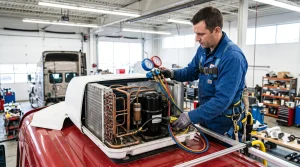
Refrigerant Abnormalities

2. Compressor Failure

When you turn on the air conditioning system from the berth control panel,listen carefully.If the DC scroll compressor malfunctions,it will emit a high-pitched metallic grinding noise or even stop running entirely.At this point,the electronic drive board will typically display a flashing diagnostic code indicating a missing phase in the compressor.Use a digital multimeter to measure the resistance between the three terminals of the compressor motor windings.Consistent resistance readings between 0.5 and 1.5 ohms indicate that the motor windings are functioning normally.

To prevent the refrigerant lines from being contaminated by acidic substances,you need to immediately replace the burned-out electric scroll compressor.Then,flush the internal copper tubing with a chemical cleaner to remove any circulating metal debris.As a professional manufacturer of truck parking air conditioners,we strongly recommend that you replace the liquid line filter-drier every time you install a new compressor,and install appropriate rubber vibration-dampening pads to isolate the cab ceiling from the effects of the motor’s rotation.
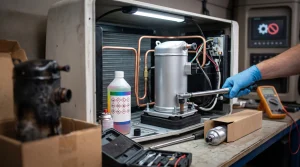
Compressor Failure

3. Poor Condenser Heat Dissipation

Wear protective gloves and carefully touch the condenser casing to check for severe overheating.When the condenser’s cooling capacity decreases,system pressure can rapidly rise to over 350 PSI,causing the high-pressure safety switch to trip within ten minutes of the compressor starting.Inspect the outdoor aluminum fins for thick mud,dead insects,or damaged louvers.Verify that the condenser fan is operating at full speed and that the motor is not dragging.
Clean the outdoor condenser coils using a low-pressure foam condenser cleaner and clean water,and carefully straighten any bent aluminum fins using a plastic HVAC fin comb.Next,replace the faulty 24V brushless condenser fan motor to restore maximum ambient airflow over the coils.To ensure the air conditioner operates effectively,maintain a minimum of 12 inches of clearance around the outdoor air intake.

4. Clogged Air Filter Element

Pull down the air intake grille inside the cab to directly check the cleanliness of the cabin air filter.A clogged filter restricts the return airflow,significantly reducing the blower airflow in the cab.Since cold air cannot enter the sleeper compartment,ice will form on the internal evaporator coils.Furthermore,a dirty filter can cause the internal fan motor to draw excessive current on humid nights.
We recommend removing the reusable nylon mesh filter once a month,rinsing it thoroughly with warm water,or replacing it with a new disposable pleated paper filter.

5. Compressor Vibration

Place your hand on the roof frame of the sleeper car to gauge the intensity of the vibration.Severe vibration is typically caused by hardened rubber mounting gaskets,loose roof bracket bolts,or an unbalanced compressor motor shaft.
Inspect the roof mounting hardware and tighten all chassis bolts to factory specifications.Replace hardened or cracked rubber vibration-damping bushings with high-strength silicone shock absorbers.You can even install sound-absorbing foam damping pads inside the roof vent box.These vibration-damping measures can eliminate structural vibrations in the box,providing the driver with a quiet sleeping environment.

6. Refrigerant Whistling and Hissing Noise

When liquid refrigerant vaporizes prematurely in narrow piping,it produces a whistling sound,typically near the evaporator expansion valve.Partial blockage of the expansion valve can cause uneven pressure differentials within the system,making it difficult to maintain the target temperature inside the vehicle even when the refrigeration unit is running continuously.

Recover the refrigerant immediately and replace the clogged thermal expansion valve or capillary tube.Install a new in-line moisture filter-drier to capture circulating desiccant particles and impurities.Check that the refrigerant oil charge is appropriate to ensure smooth valve operation.Balanced internal pressure will completely eliminate the annoying whistling noise that occurs when the system is idle at night.

Refrigerant Whistling and Hissing Noise

7. Voltage Instability

Voltage fluctuations can trigger the automatic low-voltage cutoff device,causing the refrigeration unit to shut down unexpectedly.A 24V parking air conditioner requires a stable DC voltage between 23.5V and 28.5V to operate reliably;if the voltage drops below 21.5V while the compressor is running,the control module will trigger a safety alarm.Connecting a digital voltmeter directly to the main battery’s power input terminal will allow you to immediately determine the current voltage.
Check the main power cable terminals for green corrosion and ensure the battery terminal bolts are tight.Clean corroded battery terminals with a brass wire brush and apply dielectric anti-corrosion grease.Replace any wires that are too thin with 2 AWG or 4 AWG solid copper cable.Thicker copper cable reduces line resistance and prevents voltage drops under high loads.Check the health of the auxiliary AGM or lithium batteries and replace aging battery cells promptly.

8. Compressor Overload or Temperature Sensor Malfunction

If the ambient temperature sensor or evaporator thermistor is inaccurate,it will send incorrect temperature readings to the main circuit board.Therefore,check the digital control display for a flashing temperature error code,such as E1 or E2.The electronic control unit will likely shut down the compressor prematurely or cause continuous icing.Use an ohmmeter to measure the resistance of the thermistor at room temperature and verify that it matches the factory resistance curve.

Check the sensor wiring harness for signs of wear caused by sharp metal edges in the cab,and replace any NTC temperature sensor probes that do not meet specifications with genuine OEM sensors.Then reset the main control board to clear any stored trouble codes.
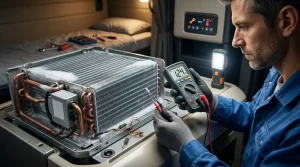
Compressor Overload or Temperature Sensor Malfunction

9. Evaporator Mildew and Foul Cabin Odor

If you smell a pungent,sour,or musty odor after turning on the sleeper compartment blower,it indicates that mold has grown on the evaporator fins.The dark,damp evaporator compartment provides an ideal environment for bacterial colonies to thrive.Mold spores in the air can also cause truck drivers to sneeze,experience itchy eyes,and have difficulty breathing.
Spray a specialized antibacterial evaporator foam cleaner directly and thoroughly onto the core fins.Allow the chemical foam to dissolve the biological fouling,which will then be flushed out through the condenser tubes.If possible,run the blower at high speed for 20 minutes to dry the internal surfaces.It is strongly recommended to replace the air conditioning return air filter regularly to remove organic dust that harbors bacteria.

10. Clogged Drain Hose

Check the floor and ceiling lining of the sleeper car for water stains or standing water.A clogged condensate drain pipe can cause condensed moisture to overflow from the internal drain pan.As a result,water will drip directly onto the berths,electrical control panels,and carpeting inside the car.When the train is moving over bumpy terrain,listen for the sound of water sloshing inside the blower housing.
Carefully clear any clogs in the drain pipe using compressed air or a nylon hose.Check to make sure the external rubber duckbill valve remains open and is free of dried-on grime,and inspect the internal drain pan for cracks or misaligned drain connections.

Preventive Maintenance to Avoid Truck Parking AC Problems

Proactive,regular maintenance is key to preventing unexpected breakdowns.Before each summer peak driving season,inspect the external condenser coils and battery connections.Clean coils ensure optimal heat dissipation,thereby reducing the mechanical load on the inverter-controlled scroll compressor.
Checking the condition of the auxiliary battery helps prevent sudden low-voltage power outages during overnight stops.Drivers must learn to diagnose truck parking air conditioning malfunctions early to prevent minor leaks from damaging the compressor.Keeping spare fuses,contact cleaner,and a digital multimeter in the toolbox can save repair time.
Maintenance IntervalTarget ComponentCore Inspection TaskReliability Benefit
WeeklyReturn Air FilterInspect for lint, dust, and pet hairMaintains maximum cabin evaporator airflow
MonthlyCondensate Drain LineFlush tube with warm water and check valvePrevents cabin interior water leaks
QuarterlyCondenser Aluminum CoilsFoam wash fins and check fan operationPrevents high-pressure thermal shutdowns
Pre-Summer SeasonBattery Bank & CablingTorque terminal lugs and test under loadEliminates sudden low-voltage inverter cutouts
Contact Us Now
Share

CONTACT US