
Oil Leaks Causing Spark Plug Flooding:Symptoms and Solutions
Severe oil leaks from a faulty engine valve cover often trigger unexpected spark plug flooding inside your engine cylinders today.Drivers often notice their vehicles misfiring suddenly during morning commutes.As a result,the engine loses its original acceleration power and shakes violently.
In addition,if the lubrication issue is not resolved,it can quickly damage the precision ignition components.We recommend identifying the root cause immediately.We will explore these critical mechanical symptoms deeply and provide a complete closed-loop repair guide.
Common Symptoms of Spark Plug Flooding
How do you know if your ignition system faces this severe issue?First,you will experience persistent engine misfires while driving.The vehicle will jerk noticeably when you press the gas pedal.Next,you might smell burning oil coming from under the hood.This happens because escaping fluid touches hot exhaust components directly.
Starting your vehicle becomes incredibly difficult over time.The thick engine oil blankets the ceramic spark plug tips completely.The electrical current cannot jump the electrode gap to ignite the fuel.Your dashboard will display a flashing check engine light immediately as a result.
Symptom Analysis and Severity Levels
| Observed Symptom | Direct Mechanical Cause | Urgency Level |
|---|---|---|
| Engine Misfire Codes (P0300-P0304) | Fluid blocks electrical current | High – Fix Immediately |
| Blue or Gray Exhaust Smoke | Oil burns inside combustion chamber | Medium – Inspect Seals |
| Strong Burning Odor | Fluid drips onto hot exhaust manifold | High – Fire Hazard |
| Rough Engine Idling | Weak spark weakens cylinder combustion | Medium – Check Plug Wells |
Get A Quote Now
How Oil Leaks Reach the Spark Plugs
Many car owners wonder exactly how fluid travels into the isolated spark plug wells.Most modern dual overhead cam engines feature deep spark plug tubes.These tubes run straight down through the center of the cylinder head.Over time,high engine temperatures degrade the soft rubber tube seals.
Hot pressurized engine oil pushes past these weak barriers easily.The fluid slowly fills the narrow metal well day after day.Eventually,the rising fluid fully submerges the ignition coil boot and the spark plug.This creates a direct electrical short circuit instantly.The ignition spark travels through the oil instead of igniting the gasoline.This destructive process causes severe spark plug flooding and paralyzes your combustion loop.
The Role of the Valve Cover in This Failure
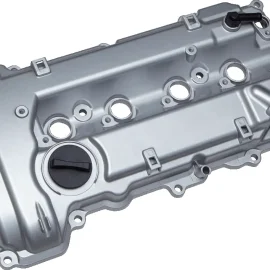
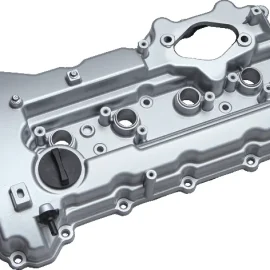
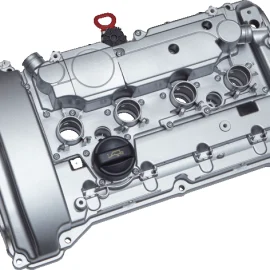
The inner tube seals live directly underneath the main engine valve cover assembly.They isolate the dry spark plug wells from the splashing oil pools inside the cylinder head.Repeated cycles of thermal expansion and contraction will cause these rubber seals to harden completely,leading to cracks in the brittle rubber and eventually oil leaks.
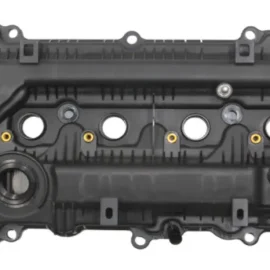
Many modern manufacturers use composite plastic valve covers instead of aluminum valve covers.However,extreme engine overheating can easily cause these plastic covers to warp.Warped covers are unable to apply downward clamping force to the gasket surface.Consequently,nasty oil leaks escape around the perimeter and saturate your ignition system.
The positive crankcase ventilation system routes harmful blow-by gases back into the intake stream safely.If this ventilation system clogs,internal crankcase pressure sky-rockets instantly.This extreme pressure forces motor oil past healthy seals aggressively.A clogged PCV valve directly accelerates spark plug flooding issues.
Rough road vibrations loosen the mounting fasteners over thousands of highway miles.Loose fasteners allow the housing to lift slightly from the metal mating surface.Fluid escapes easily and fills your plug wells overnight.
Component Lifespans under High Heat
| Component Name | Typical Material | Expected Lifespan (Miles) | Main Failure Cause |
|---|---|---|---|
| Main Outer Gasket | Nitrile Rubber / Viton | 60,000 – 80,000 Miles | Heat hardening |
| Spark Plug Tube Seals | Molded Rubber | 50,000 – 70,000 Miles | Constant oil submersion |
| Plastic Valve Cover | Composite Polymer | 100,000+ Miles | Thermal warping |
Step-by-Step Solutions to Fix the Problem
You can resolve this mechanical issue easily with a methodical repair strategy.First,disconnect the negative battery terminal to ensure absolute electrical safety.Next,pull the ignition coils out of the submerged wells very gently.You will likely see thick black fluid coating the plastic boots entirely.
Do not remove the spark plugs yet while oil remains in the wells.If you remove them now,dirty fluid will pour directly into your combustion chambers.This mistake can cause severe engine hydro-locking damage.Instead,use a fluid extraction pump or clean shop towels to remove the liquid first.Clean the wells thoroughly until the metal walls are completely dry.Then,remove the old valve cover to replace the degraded rubber gaskets.
Required Repair Tools and Functions
| Tool Name | Specific Technical Function | Importance Level |
|---|---|---|
| Inch-Pound Torque Wrench | Tightens fasteners to exact factory specs | Absolutely Essential |
| Spark Plug Socket (5/8 or 13/16) | Removes and installs plugs safely without damage | Absolutely Essential |
| Fluid Extraction Syringe | Sucks pooled oil out of the deep wells | Highly Recommended |
| Brake Cleaner Spray | Degreases the metal mating surfaces completely | Highly Recommended |
Prevent Future Damage Permanently
Regular preventative maintenance protects your ignition system from future failures. Always inspect your engine bay for early signs of fresh oil leaks.Wipe away any dirt accumulation around the edges of the plastic housing monthly.Always use high-quality synthetic motor oil during your regular oil changes.
Premium oils contain advanced chemical additives that keep rubber gaskets soft and pliable.Your seals will resist cracking and hardening for a much longer time.Ultimately,proactive care saves you thousands of dollars in emergency mechanic bills.Keep your air loops and oil loops perfectly sealed for a reliable drive.
Contact Us Now
- RM901 No.22 Tangjiaqiao Road Wenzhou China
- +86 138 1973 9327
- [email protected]
- https://www.autosparesupplier.com/