
Are Valve Cover Hold Downs Necessary With Aluminum Covers?
Installing premium valve cover hold downs ensures a leak-free seal on your high-performance engine.Many mechanics wonder if aluminum valve covers require these extra components.Stamped steel covers bend easily under tight bolt pressure.Consequently,they often leak oil onto hot exhaust manifolds.Cast aluminum engine valve covers feature thick,rigid mounting rails instead.They distribute clamping force much more evenly across the gasket.
What Are Valve Cover Hold Downs?
The Core Functions of Valve Cover Hold Downs
The primary purpose of these tabs involves maximizing oil containment inside your engine block.First,they eliminate gaps between the mounting bolts along the cover rail.If gaps form,hot oil escapes and creates a smoking engine bay.Second,they prevent overtightening damage on soft cork or rubber gaskets.When you tighten a bare bolt,you can easily tear the gasket material.
Valve cover hold downs distribute that torque evenly to prevent tears.They absorb engine vibrations during high-speed highway driving.This stabilization prevents bolts from backing out over thousands of miles.Your engine maintains clean operation.
Key Functions and Engineering Benefits
| Operational Challenge | How Valve Cover Hold Downs Help | Direct Engineering Benefit |
|---|---|---|
| Localized Bolt Stress | They spread pressure across the rail | Prevents cover rail warping entirely |
| Gasket Crushing | They distribute torque loads evenly | Maximizes overall gasket operational lifespan |
| Highway Vibrations | They secure mounting bolts firmly | Prevents oil leaks from loose fasteners |
Get A Quote Now
Common Types Of Engine Valve Cover Hold Downs
These short metal brackets span about two to three inches in total length.They feature a single center hole for the mounting bolt to pass through.The outer edges flare downward to grip the cover rail firmly.They work excellently on classic V8 engines with tight clearance restrictions.You can install them quickly without modifying any surrounding engine components.
Long bars connect multiple bolt holes together along the straight edges of the engine.They create a continuous line of rigid clamping force across the entire perimeter.These bars work beautifully on long straight-six engines or large diesel motors.They add a clean,professional appearance to your custom engine bay.
T-bars combine the bolt and the hold-down bracket into one single hardware piece.They feature a large T-shaped handle at the very top of the stud.You can tighten or remove your engine valve cover hold downs using your bare hands.Drag racers use these parts frequently to adjust valves quickly between race tracks.
These specialized tabs feature an extra integrated clip on the outer edge.This clip holds spark plug wires or electrical harnesses safely away from hot exhaust pipes.You solve two major engine bay problems with one simple piece of hardware.They keep your wiring organized while securing your oil seals perfectly.
When to Skip Them with Aluminum Covers?
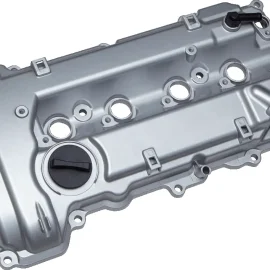
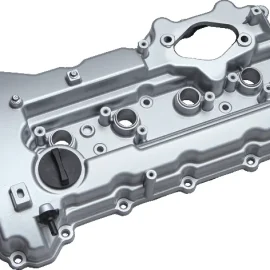
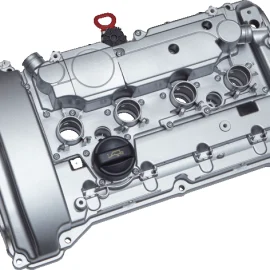
Cast aluminum valve covers are inherently very rigid.Under normal circumstances,cast aluminum valve covers do not require valve cover fasteners at all.Stamped steel valve covers have thin walls and high flexibility,making them prone to deformation under even slight pressure.In contrast,using them on plastic valve covers can cause the bolt flanges to crack.Cast aluminum valve covers feature thick,precision-machined mounting flanges.These substantial flanges resist bending even under high torque loads.A single standard bolt is sufficient to provide adequate,uniform pressure.
Furthermore,modern cast aluminum covers often utilize recessed bolt pockets.These machined pockets guide the bolt straight into the cylinder head perfectly.Thus,adding extra brackets is physically impossible and completely unnecessary.If your aluminum cover has thick rails,skip the tabs safely.
Structural Comparison of Cover Materials
| Design Feature | Stamped Steel Covers | Aluminum Covers | Hold Downs Required? |
|---|---|---|---|
| Rail Thickness | Very thin and flexible | Thick and precision-machined | Only required for thin steel walls |
| Rigidity Level | Low resistance to bending | High structural rigidity | Essential for steel; skip for cast |
| Clamping Need | Needs load spreading tabs | Distributes load naturally | Skip safely on thick cast aluminum |
When You Might Still Need Them
However,certain unique situations require you to install valve cover hold downs even with aluminum components. For example,fabricated sheet-metal aluminum covers feature welded construction instead of a solid cast design. These fabricated covers use thinner aluminum plates to reduce overall engine weight.Their mounting rails can flex slightly under intense racing conditions.You must use valve cover hold downs to prevent oil seepage along the long welded seams.
High-vibration environments demand extra structural support.Off-road racing trucks experience constant,violent shaking on rough dirt tracks.This continuous shaking strains the mounting hardware severely.Using tabs helps lock everything together safely.
Usage Checklist for Aluminum Covers
| Engine Application Type | Aluminum Cover Structure | Are Hold Downs Recommended? |
|---|---|---|
| Standard Daily Driving | Solid Cast Aluminum | No,skip them completely to save weight |
| High-Performance Racing | Welded Sheet-Metal | Yes,install them to prevent rail flexing |
| Heavy-Duty Off-Roading | Thick Cast Aluminum | Highly recommended to combat intense vibrations |
Advanced Installation and Torque Guidelines
Proper installation technique matters more than the hardware itself.First,clean the cylinder head mating surface thoroughly using a clean rag.Remove all old gasket material,residual oil,and liquid sealant completely.Any debris left behind will cause a persistent oil leak later.Next,place your new gasket onto the clean engine rail carefully.If you use valve cover hold downs,line them up straight over each bolt hole.
Subsequently,start every mounting bolt by hand to prevent cross-threading the delicate aluminum threads.Use a calibrated inch-pound torque wrench to tighten the fasteners.Always follow the factory torque specifications exactly.Overtightening will crack your expensive aluminum housing or ruin the threads permanently.Work in a crisscross pattern from the center bolts outward to spread pressure perfectly.This disciplined approach guarantees a reliable,permanent seal across the entire engine block.
Contact Us Now
- RM901 No.22 Tangjiaqiao Road Wenzhou China
- +86 138 1973 9327
- [email protected]
- https://www.autosparesupplier.com/