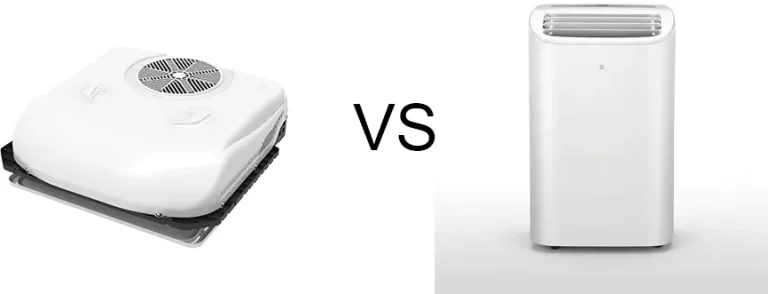
Parking AC vs Portable AC: Which Is Better for RV Living?
A 12V rooftop air conditioning system is best suited for full-time RV living, so let’s keep it simple; let’s compare parking AC vs portable AC.Mobile living spaces require compact air conditioning units, ideally powered directly by an auxiliary lithium-ion battery pack. Portable air conditioners take up valuable space in the narrow aisles of a vehicle and consume a significant amount of AC power. In contrast, dedicated DC in-vehicle air conditioners can be neatly installed on the roof or under the passenger seats, and they can smoothly adjust cooling output to accommodate changes in afternoon temperatures.
Core Architecture: Parking AC vs Portable AC
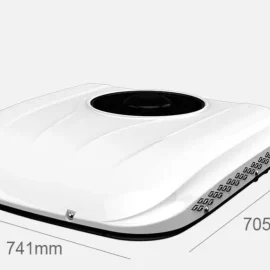
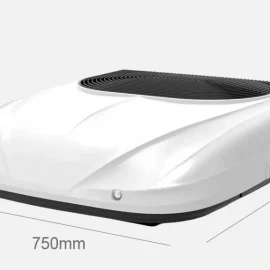
First, let’s compare vehicle-mounted air conditioners and portable air conditioners in terms of their internal core cooling design and airflow paths. 12V or 24V parking air conditioners completely isolate the air generated by the indoor evaporator from the heat produced by the outdoor condenser. Roof-mounted vehicle air conditioners can be installed directly into standard 14×14-inch RV roof vents, thereby saving interior space.
The outdoor condenser fan discharges waste heat directly outside without the need for ductwork. In contrast, standard portable air conditioners integrate both the evaporator and condenser into a heavy, floor-standing unit. Single-duct portable air conditioners draw in cooled air from inside the vehicle, pass it through a high-temperature condenser, and expel it outdoors. This creates negative pressure inside the vehicle, drawing in hot outside air through the window seals. Even dual-duct portable air conditioners release heat back into the vehicle through small plastic exhaust tubes.
Technical Specifications Comparison
| System Metric | 12V/24V Parking AC | Dual-Hose Portable AC | Single-Hose Portable AC |
|---|
| Power Supply Input | 12V or 24V DC Direct | 115V AC or Battery Pack | 115V AC Shore or Inverter |
| Effective Net Cooling | 8,000 to 10,500 BTU | 5,500 to 7,500 BTU | 3,500 to 5,000 BTU |
| Compressor Technology | DC Inverter Scroll | Variable or Fixed Rotary | Fixed-Speed Reciprocating |
| Cabin Pressure Effect | Neutral Sealed Loop | Neutral Balanced Flow | Negative Pressure Leak |
| Continuous Power Draw | 250W to 750W DC | 700W to 1,100W AC | 900W to 1,350W AC |
As shown in the table above, a comparison of parking air conditioners and portable air conditioners reveals a significant difference in net cooling capacity. Parking air conditioners can maintain 100% of their rated cooling capacity inside a sealed RV cabin. Portable air conditioners, on the other hand, lose 20% to 35% of their cooling capacity through the plastic exhaust hose.
Electrical Efficiency in a Parking AC vs Portable AC
The performance of off-grid batteries is the key factor distinguishing between RV air conditioners and portable air conditioners. Most RV battery packs store energy in lithium iron phosphate batteries as 12V, 24V, or 48V direct current. Dedicated RV air conditioners are connected directly to the DC bus via thick copper wires. As a result, the brushless DC compressor can operate with 95% electrical efficiency, with virtually no power conversion losses.
However, most portable air conditioners require 115V AC power from a high-power inverter. Converting DC battery power to 115V AC results in 12% to 18% of the stored energy being wasted as heat. Fixed-speed portable compressors generate a startup surge of up to 2,200 watts every time the thermostat activates, whereas variable-speed RV air conditioners start up smoothly and consume only 250 watts of power in nighttime sleep mode.
In summary, a 400Ah 12V lithium-ion battery pack can easily power an RV air conditioner for 12 hours, whereas the same battery pack will run out of power in just 5 hours when powering a 115V portable floor-standing appliance.
Space, Noise, and Road Vibration Durability
The interior space in Class B RVs and small travel trailers is very limited. A floor-standing portable air conditioner takes up three square feet of aisle space and blocks cabinet doors. Owners must disassemble, connect, and store the bulky five-inch plastic window-style air conditioner hoses every time they go camping. Roof-mounted or under-seat parking air conditioners free up the entire interior space.
Sound insulation is crucial when sleeping in a compact metal cabin. Noise levels between parking air conditioners and portable air conditioners can differ by as much as 12 decibels. A roof-mounted parking air conditioner isolates the compressor’s hum outside the roof, keeping cabin noise at 44 decibels. A portable air conditioner places the noisier compressor next to the bed, continuously generating 56 decibels of noise.
Commercial parking air conditioners manufactured by K-Stone use 6G-grade shock-absorbing rubber mounts and thick copper tubing to withstand rough roads. In contrast, household portable air conditioners are prone to issues such as cracked solder joints and broken plastic casters after traveling on bumpy roads.
| Performance Factor | Rooftop Parking AC | Under-Bench Parking AC | Portable Floor AC |
|---|
| Interior Floor Space Used | 0 Sq Ft | 0 Sq Ft (Hidden in Base) | 2.5 to 4.0 Sq Ft |
| Night Sleep Noise Level | 42 to 46 dB | 40 to 44 dB | 52 to 60 dB |
| Road Vibration Rating | 6G Automotive Grade | 6G Automotive Grade | Stationary Home Rating |
| Condensate Water Handling | Gravity Roof Drain | Chassis Bottom Drain | Manual Tank Drain |
These data illustrate the differences between fixed and portable air conditioners in terms of their ability to handle everyday road vibrations and cabin noise. Installing the compressor outside the vehicle or under the seats can reduce noise levels in sleeper cars by half.
Parking AC vs Portable AC:Cost and Installation
Dual-tube portable air conditioners retail for between $400 and $750; they require no permanent modifications to the roof and can be installed in 15 minutes using a window mounting kit. However, custom RV window mounts often leak and leave safety gaps around ground-level windows.
The initial cost of a 12V/24V DC vehicle air conditioner ranges from $700 to $1,400; installation typically takes three hours and can be done directly into an existing 14×14-inch roof vent. Although the initial hardware cost is higher, a vehicle air conditioner eliminates the need for a 3,000-watt inverter. The $600 savings on inverter hardware is enough to offset the higher purchase price of the DC car air conditioner.
Parking AC vs Portable AC:How To Choose?
Choosing the right cooling hardware requires matching your electrical system to your specific travel habits. These tailored solutions will help you resolve the dilemma of choosing between a parked-vehicle air conditioner and a portable air conditioner for your RV.
Full-Time Off-Grid Boondocking
Full-time RV travelers and off-grid campers should install a 12V or 24V rooftop parking air conditioner. Where local laws permit, it is recommended to connect the air conditioner directly to a 400Ah lithium iron phosphate battery pack using 2 AWG solid copper wire, and to pair the battery pack with a 600-watt rooftop solar panel and a 60-amp DC-to-AC generator charger. This way, solar power and the AC generator can recharge the battery during the day, allowing you to enjoy free air conditioning at night, anytime and anywhere. It is best to install a roof vent seal to prevent frequent circulation of cold air.
Temporary and Leased Camper
For renters who can’t modify their vehicle roofs or owners of weekend campers, a dual-tube inverter portable air conditioner is a good option. Never purchase a single-tube portable air conditioner, as the negative pressure will severely impair its cooling performance in hot weather. Use strong Velcro to wrap each of the two plastic exhaust tubes separately in a 6-millimeter-thick neoprene insulation sleeve. Insulated exhaust tubes can prevent the heat emitted by the exhaust from raising the interior temperature by up to 4 degrees Celsius.
High-Roof Solar Optimization
A camper van with a roof completely covered in solar panels should be equipped with a split-system parking air conditioner installed under the seats. Mount the sealed DC condenser beneath the vehicle chassis, behind the rear axle. Place the slim evaporator fan inside the under-bed storage compartment and route the cold air duct to the roof. This split-system layout saves both roof space and floor space.
Recommended RV Cooling Solutions by Application
| RV Travel Style | Best AC Choice | Minimum Battery Bank | Total Setup Cost |
|---|
| Full-Time Off-Grid Van | 12V/24V Rooftop Parking AC | 400Ah 12V LiFePO4 | $1,800 to $2,600 |
| Solar-Maxed Overland Rig | Under-Bench Split Parking AC | 200Ah 24V LiFePO4 | $2,000 to $2,900 |
| Weekend Campground Trailer | Dual-Hose Inverter Portable AC | 115V Shore Power Hookup | $450 to $750 |
| Pop-Up Canvas Camper | Compact 24V Wave Portable AC | 100Ah 24V Portable Station | $950 to $1,500 |
Previous
What Is an Inverter Scroll Compressor? Working Principle & Key Differences
Next
How to Store and Prepare Camper AC for Winter? [2026]