
Table of Contents
Copper vs Aluminum Refrigeration Tubing in A Parking AC
During operation, 12V and 24V DC parking air conditioners are constantly subjected to road shocks, chassis flex, and extreme thermal cycling. Over time, thin or brittle tubing is prone to cracking, resulting in costly leaks of R134a refrigerant into the atmosphere. While aluminum refrigeration tubing is a viable option if the primary goal is to reduce roof weight, copper refrigeration tubing offers superior thermal conductivity, higher burst strength, and the ability to be brazed for roadside repairs in emergencies.
Copper vs Aluminum Refrigeration Tubing:Heat Transfer Efficiency
The thermal conductivity determines how quickly the air conditioner can remove heat from an overheated sleeper cab. Phosphor-deoxidized copper has a thermal conductivity of 398 watts per meter-Kelvin, while standard 3003 aluminum alloy has a thermal conductivity of only 205 to 235 watts per meter-Kelvin; copper tubing transfers heat nearly twice as fast as aluminum tubing of the same thickness.
Aluminum refrigeration tubes can match the cooling performance of copper refrigeration tubes, but this requires the design of complex, matched microchannel fins. However, narrow aluminum microchannels are easily clogged by insects on highways, diesel soot, and construction dust. Copper tubes have been proven by the industry to maintain stable cooling efficiency during years of high-intensity commercial operation.
Metallurgical and Thermal Specifications Comparison
| Engineering Parameter | C12200 Copper Tubing | AA3003 / AA6063 Aluminum Tubing | Impact on Parking AC Operation |
|---|---|---|---|
| Thermal Conductivity | 398 W/m·K | 205 – 235 W/m·K | Copper rejects cabin heat nearly twice as fast |
| Material Density | 8.94 g/cm³ | 2.70 g/cm³ (70% Lighter) | Aluminum lowers rooftop static weight by 8 to 14 lbs |
| Yield Tensile Strength | 250 – 340 MPa | 115 – 185 MPa | Copper resists high-pressure spikes without splitting |
| Safe Working Pressure | 700 – 1,100 PSI | 350 – 550 PSI | Copper handles extreme desert condenser pressures safely |
| Base Melting Point | 1,085°C (1,985°F) | 660°C (1,220°F) | Copper allows fast oxy-acetylene torch brazing |
Get A Quote Now
We offer parking heaters and parking coolers in a variety of colors.Get a free, fast quote today.As a direct original equipment manufacturer,we further reduce your costs.Eliminate middlemen and brand premiums,cutting out additional layers of intermediary.We have the item in stock and can pack and ship it at any time.
Vibration Fatigue and Durability in Copper vs Aluminum Refrigeration Tubing
Copper has high ductility and excellent fatigue resistance, maintaining good performance even under repeated bending stresses. Therefore, copper suction and discharge lines can bend slightly as the compressor moves without cracking.
In contrast, aluminum has a lower fatigue limit and undergoes rapid work hardening under continuous vibration. Within 18 months, work-hardened aluminum tubing becomes brittle around compressor connections and condenser mounting brackets. Tiny stress cracks can open up, causing the entire refrigerant charge to leak out overnight. Our professional maintenance experience and records show that the vibration-induced leak rate for aluminum-tubing systems is three times that of copper-tubing systems.
Galvanic Corrosion and Environmental Exposure Risks
External condensers mounted on the roof and beneath the chassis are subject to constant erosion from road salt, acid rain, and humid coastal environments. A comparison of copper and aluminum refrigeration pipes reveals significant differences between the two metals in terms of chemical corrosion. Copper resists moisture in the general atmosphere well, forming a stable layer of green patina that protects the underlying metal. However, organic acids present in the underlying plywood or foam insulation can cause pitting corrosion in exposed copper tubing. Aluminum, on the other hand, forms a thin oxide film that resists corrosion from pure rainwater but is unable to withstand the chemicals found on winter roads. De-icing salts such as magnesium chloride and calcium chloride can corrode the walls of thin aluminum tubing within two winters.
Connecting aluminum tubing directly to brass service valves or copper compressor fittings can cause galvanic corrosion. When moisture seeps between these dissimilar metals, electrochemical reactions rapidly dissolve the aluminum fittings. Consequently, untreated aluminum fittings are more prone to irreparable pinholes than all-copper piping.
Real-World Failure Modes and Reliability Data
| Failure Category | Copper Tubing Performance | Aluminum Tubing Performance | Best Prevention Method |
|---|---|---|---|
| Compressor Joint Cracking | Rare (Under 3% over 5 years) | Frequent (18% – 25% over 5 years) | Install braided vibration loops or copper elbows |
| Winter Road Salt Pitting | High natural salt resistance | Severe pitting in 2 to 3 winters | Wash coils monthly and apply epoxy coating |
| Galvanic Joint Leaks | Zero risk in all-copper loops | High risk at copper-to-aluminum joints | Seal transition joints with adhesive heat-shrink |
| Fin and Tube Debris Damage | Thick walls resist gravel impacts | Thin 0.4mm microchannels puncture easily | Mount stainless steel mesh rock guards |
Field Repairability: Brazing Copper vs Aluminum Refrigeration Tubing
When it comes to the convenience of on-site repairs, copper tubing has a clear advantage. Copper has a melting point of 1,085 degrees Celsius, while a standard silver-phosphorus brazing alloy has a melting point of 730 degrees Celsius. This wide temperature range of 355 degrees Celsius allows any technician at a truck repair shop to complete the brazing of a copper pipe leak within 20 minutes. Before melting, copper turns a dark cherry red, allowing technicians to clearly observe the temperature changes.
Aluminum, on the other hand, has a melting point of 660 degrees Celsius, while the melting point of its surface oxide layer is 2,072 degrees Celsius. Aluminum brazing rods have a melting point of 580 degrees Celsius, with a working temperature range of only 80 degrees Celsius. Furthermore, aluminum does not change color before melting, which causes the heat from the torch to instantly penetrate the thin tube walls. As a result, most repair shops refuse to braze leaks in aluminum condensers and instead require the replacement of the entire coil.
Practical Solutions to Prevent Parking AC Tubing Leaks
Whether your parking AC uses copper vs aluminum refrigeration tubing, proactive engineering modifications prevent costly refrigerant leaks.
- Choose Copper-Tube Condensers for Heavy-Duty Vehicles:
Specify parking AC models built with C12200 inner-grooved copper tubes for semi-trucks, dump trucks, and construction equipment. Inner-grooved copper rifling increases internal surface area by 30 percent, boosting heat transfer while resisting road shock. - Isolate High-Vibration Compressor Lines:
Install EPDM rubber line clamps every twelve inches along refrigerant tubing runs. Never let metal tubing rub directly against sharp aluminum roof ribs or steel chassis brackets. - Protect Dissimilar Metal Transition Joints:
Inspect the factory bi-metal joint where the copper compressor stub meets the aluminum condenser line. Wrap this transition joint tightly with mastic-lined waterproof heat-shrink tubing to block salt spray and stop galvanic corrosion. - Apply Protective Coil Coatings on Aluminum Units:
If weight limits force you to use an aluminum unit on a lightweight camper, spray the condenser with polyurethane HVAC coil coating. This micro-thin polymer barrier prevents road salt and coastal sea air from pitting bare aluminum fins. - Maintain Proper Vacuum During Repairs:
Whenever servicing copper vs aluminum refrigeration tubing, pull a deep vacuum down to 500 microns before recharging refrigerant. Removing all internal moisture prevents hydrofluoric acid formation, which eats through tubing walls from the inside out.
Cost and ROI Solutions for Parking AC Tubing Systems
| Expense & Maintenance Metric | All-Copper Tubing System | Aluminum Microchannel System | Practical Fleet Recommendation |
|---|---|---|---|
| Upfront Equipment Cost | $750 – $1,300 (15% higher) | $550 – $950 (Budget entry) | Pay extra upfront for commercial trucks |
| Average Leak Repair Cost | $90 – $160 (Torch braze & recharge) | $450 – $800 (Replace full coil assembly) | Copper cuts maintenance budgets by 65% |
| Expected Operational Lifespan | 8 to 12 Years | 3 to 5 Years | Copper doubles long-term return on investment |
| Recommended Maintenance | Annual water rinse & grommet check | Monthly salt wash & anti-corrosion spray | Coat aluminum coils before winter driving |
Partnering with K-Stone on Parking Air Conditioning
Are you looking for manufacturers and wholesalers of 12V and 24V parking air conditioners?Looking for manufacturers and wholesalers of 12V and 24V parking air conditioners? K-Stone is a supplier of parking air conditioners based in China, and its factory products are certified to ISO 16949:2016, CE, E-Mark, and other standards.
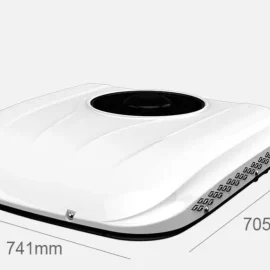
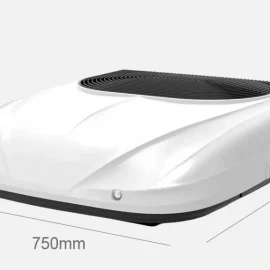
If you are looking for a compact unit, our Model D-1000 12V rooftop parking air conditioner offers 1800W cooling for standard trucks.It uses scroll variable-frequency compressor technology and R123a as the refrigerant.We also offer a 24V version of the D-1000, with a refrigeration capacity of up to 2,100 W, providing even more powerful cooling performance.
Contact Us Now
- RM901 No.22 Tangjiaqiao Road Wenzhou China
- +86 138 1973 9327
- [email protected]
- https://www.autosparesupplier.com/
Share