
Does The Valve Cover Get Hot?
Many drivers ask,does the valve cover get hot during normal daily operation?The simple answer remains an absolute yes.The engine valve cover is always in direct contact with the hot engine block,so it absorbs a significant amount of heat.In this technical guide,we’ll clearly explain these key thermodynamic principles.Let’s take a look at the normal temperature range for your engine and how to effectively prevent dangerous mechanical overheating.
Why Does The Valve Cover Get Hot Daily?
The engine continuously produces tiny explosions inside its metal cylinders;these rapid explosions instantly generate a massive amount of heat.This intense heat is transferred directly upward to the engine’s upper components.Additionally,scalding hot engine oil constantly splashes onto the internal metal valve cover. Therefore,it’s obvious that the valve cover will get hot.
The valve cover acts as a physical seal,safely containing the scalding hot engine oil.Consequently,heat transfer occurs naturally every time the vehicle is in operation.
Primary Engine Heat Sources
| Heat Source | Mechanical Action | Thermal Impact |
|---|---|---|
| Combustion Chamber | Ignites fuel and air rapidly | Extreme heat rises immediately |
| Engine Oil | Lubricates fast moving metal parts | Transfers heavy heat upward |
| Exhaust Manifold | Pushes hot exhaust gases out | Radiates ambient block heat |
Normal Operating Temperatures For Your Engine
Most normal engines operate safely at temperatures between 195 and 220 degrees Fahrenheit.Touching this hot surface with bare hands will immediately cause severe skin burns;the engine must be allowed to cool completely before beginning any work.Generally,a hot valve cover indicates that the engine is operating normally. However,temperatures exceeding 250 degrees Fahrenheit indicate a serious and dangerous overheating problem.
Get A Quote Now
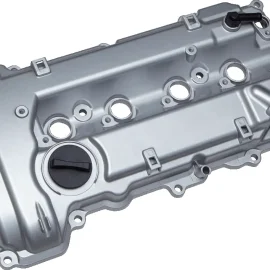
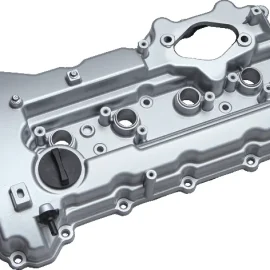
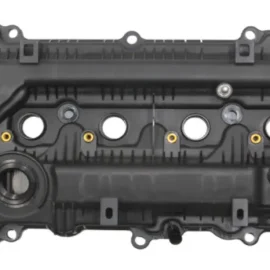
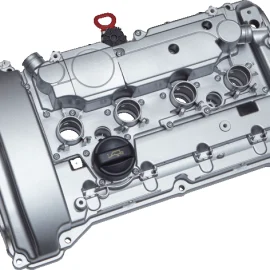
We are professional engine valve cover supplier in China. We offer valve covers for a variety of brands, such as Mercedes-Benz, BMW, Ford, and more. Click the button to browse and get a free, quick quote.
What Happens During Extreme Engine Overheating?
If overheating is left unchecked,it can quickly damage engine components.Extreme heat can cause thin metal and low-grade plastic materials to deform permanently,and a deformed valve cover cannot effectively seal high-temperature engine oil.Internal rubber gaskets will melt and crack under such immense pressure.This serious failure can lead to dangerous engine oil leaks onto the high-temperature exhaust pipes.Eventually,you may smell the odor of burning engine oil or see thick white smoke.
Severe Overheating Warning Signs
| Warning Sign | Direct Mechanical Cause | Required Immediate Action |
|---|---|---|
| Burning Oil Smell | Oil leaking onto hot exhaust | Inspect the upper rubber gasket |
| White Engine Smoke | Oil burning off the metal | Turn off the vehicle engine |
| Dashboard Warning | Primary coolant system failure | Check engine coolant levels |
Does The Valve Cover Get Hot On All Cars?
This strict law of thermodynamics applies to all internal combustion engines worldwide.Every day,we supply high-quality parts for BMW,Ford,General Motors,and Honda vehicles.Our replacement parts are also a perfect fit for Hyundai,Mazda,Mercedes-Benz,and Peugeot vehicles.Toyota and Volkswagen engines also consistently generate extremely high heat in the cylinder head area.Every brand requires an extremely durable valve cover to function properly.To ensure this,automotive engineers test these specific components under extreme high-temperature conditions in laboratories.Thus,asking does the valve cover get hot applies universally to all brands.You cannot escape thermal physics regardless of your specific vehicle badge.
Effective Solutions If Your System Overheats
You must take immediate action if your engine temperature spikes dangerously high.First,check your primary engine coolant levels inside the plastic reservoir tank.Next,verify that your electric radiator cooling fans spin correctly and fast.Consequently,broken fans cause the entire engine block to overheat almost instantly. Furthermore,inspect the metal water pump for any hidden liquid coolant leaks.Therefore,fixing the main cooling system cools down the valve cover automatically.Thus,you solve the root problem instead of just treating the symptoms.Never ignore a rising dashboard temperature gauge during a long highway trip.
Effective Overheating Solutions
| Diagnostic Step | Specific Mechanical Action | Expected Final Result |
|---|---|---|
| Check Coolant Level | Add correct fluid to the reservoir | Lowers overall block heat |
| Inspect Radiator Fans | Replace broken electrical fan motors | Restores heavy front airflow |
| Verify Water Pump | Swap leaking metal pump parts | Restores internal liquid circulation |
Why Upgrading To A Premium Valve Cover Matters
Choosing high-quality replacement parts can completely prevent serious overheating damage in the future.Original equipment manufacturer standard plastic parts become extremely brittle after years of thermal cycling,and they can crack and fail at the worst possible moment.The high-quality materials we use can withstand extreme thermal cycling with virtually no permanent deformation or cracking.
How To Maintain Top Engine Components Properly
To ensure the engine has the longest possible service life,you must perform routine maintenance.First,gently clean the external metal surfaces with a safe automotive degreaser.Second,removing thick oil sludge allows the metal to dissipate heat more quickly;a clean valve cover operates at a lower temperature than a dirty one. When changing the oil regularly,be sure to check the mounting bolts.Please note that you should use a calibrated mechanical torque wrench to carefully tighten any loose bolts.This ensures uniform clamping force,which prevents the rubber gaskets from completely rupturing.
Contact Us Now
- RM901 No.22 Tangjiaqiao Road Wenzhou China
- +86 138 1973 9327
- [email protected]
- https://www.autosparesupplier.com/
Share