Where Is the Intake Manifold Located? Engine Layout Guide
Knowing where your
intake manifold is located helps you diagnose engine misfires and vacuum leaks quickly.The
intake manifold is typically located directly above or next to the cylinder head assembly and is responsible for distributing fresh air to each combustion chamber to ensure complete fuel combustion.However,the location of the intake manifold in a four-cylinder engine differs from that in a large-displacement V6 or V8 engine.In some designs,the plastic engine hood often obscures the intake manifold.
Understanding the Intake Manifold Location in Modern Engines
The intake manifold is the central air intake passage of the engine assembly;it connects the air filter housing,the throttle body, and the cylinder head intake ports,and is typically located downstream of the throttle body.In most front-wheel-drive vehicles,the engine is mounted transversely in the engine compartment,and the intake manifold location faces either the front bumper or the rear firewall.
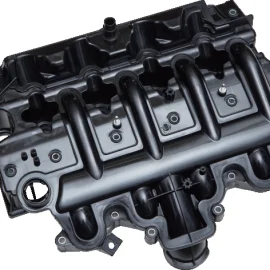
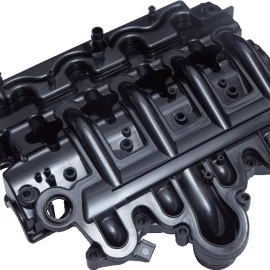
Modern intake manifolds are made of durable composite plastic or cast aluminum.Black composite
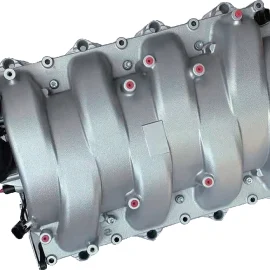
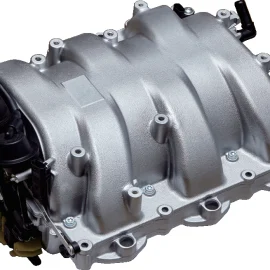
plastic intake manifolds are widely used in modern passenger cars to reduce engine weight.In contrast,high-performance vehicles use
cast aluminum intake manifolds to withstand high-temperature stresses.Multiple individual intake manifolds branch off from a central chamber called the boost chamber;these manifolds connect directly to the engine’s intake ports via high-temperature-resistant silicone rubber gaskets.
Intake Manifold Location Across Engine Types
| Engine Configuration | Intake Manifold Location | Visual Identification Markers | Common Vehicle Examples |
|---|
| Inline-4 (I4) | Front or rear side of cylinder head | Curved plastic or metal tubes entering engine side | Honda Civic, Toyota Camry, Ford Focus |
| V6 / V8 Engines | Valley between left and right cylinder banks | Large central plenum sitting directly on top | Ford F-150, Chevy Silverado, Dodge Charger |
| Boxer / Flat Engines | Top center of horizontally opposed engine | Spider-like legs stretching outward to sides | Subaru Outback, Subaru WRX, Porsche 911 |
Intake Manifold Location Across Different Engine Layouts
Inline four-cylinder engines feature the most accessible intake manifold location.Manufacturers typically mount the manifold on the front or rear of the cylinder head.If your engine has a transverse layout,the manifold is located directly behind the radiator fan.
In V6 and V8 engines,the intake manifold is located in the V-shaped groove of the engine block,which lies between the left and right sets of cylinders.The manifold connects the two cylinder heads and supplies air evenly to all cylinders.Truck engines typically use tall,cast intake manifolds to enhance low-end torque.In Subaru’s horizontally opposed four-cylinder engines,the intake manifold is located above the center of the engine block.
Key Components Attached to the Intake Manifold
| Connected Component | Location Relative to Manifold | Primary Function |
|---|
| Throttle Body | At the main plenum air inlet | Controls overall airflow based on gas pedal input |
| Fuel Rail & Injectors | Installed along individual runners | Delivers pressurized fuel into intake ports |
| MAP / MAF Sensor | Threaded into plenum / inlet duct | Measures intake air pressure and volume |
| EGR Valve | Bolted to side or rear of manifold | Recirculates exhaust gas to lower temperatures |
Get A Free Fast Quote
We offer intake manifolds for a variety of brands, such as Mercedes-Benz, BMW, Ford, and more. Click the button to browse and get a free, quick quote.
Visual Indicators to Spot the Intake Manifold
We’ll start at the air filter housing and follow the wide plastic intake hose.This intake hose leads directly to the metal throttle body,and directly behind the throttle body is the main intake manifold.Look for the separate intake manifolds with four,six,or eight branches leading to the engine cylinder head.
Locate the nearby fuel rail and electronic fuel injectors.On port-injection engines,the fuel rail is bolted directly to the branches of the intake manifold.There are also several thin rubber vacuum hoses connected to ports inside the manifold,which provide suction for the power steering booster and emission control solenoids.Trace the vacuum hoses backward to locate the manifold. If a large plastic cover is blocking your view,pull it upward firmly to remove it.
How to Access the Intake Manifold Location Safely
Access to the intake manifold location requires basic automotive hand tools.Before performing any work on the engine,be sure to disconnect the negative battery cable to prevent accidental electrical sparks near pressurized fuel lines.
Unscrew the mounting bolts and remove the plastic engine cowl.Disconnect the sensor wiring harnesses connected to the throttle body and the manifold.Take special care to gently press the release tabs to avoid breaking the fragile plastic electrical connectors.
Use masking tape to mark all rubber vacuum hoses for easy reassembly.Use a flathead screwdriver to loosen the hose clamps connecting to the intake duct.Finally,remove the mounting bolts securing the manifold to the cylinder head.Carefully lift the manifold and inspect the internal ports for severe carbon buildup.
Tools Required for Accessing the Intake Manifold
| Tool Name | Key Function During Access | Safety Tip |
|---|
| Socket Set (8mm – 12mm) | Removes mounting bolts and brackets | Use torque wrench to prevent stripping |
| Flathead Screwdriver | Loosens intake duct hose clamps | Avoid puncturing soft rubber air hoses |
| Plastic Trim Tool | Unclips wire harness retainers safely | Prevents breaking brittle |
| Masking Tape & Marker | Labels vacuum lines & sensor plugs | Ensure correct reinstallation |
Symptoms of Issues Near the Intake Manifold
Understanding your intake manifold location helps when driveability issues emerge.
If the intake manifold gasket is damaged,unmetered air will enter the combustion chamber directly,causing problems such as lean-burn misfires and unstable idle.
Carbon buildup inside the intake manifold restricts airflow when the engine is running at high speeds.The driver will notice sluggish acceleration and a significant drop in engine power.
A cracked plastic intake manifold can produce a loud whistling or hissing sound.If you hear a hissing sound,use a smoke machine to inspect the area around the intake manifold.
Previous
Can You Reuse Intake Manifold Gaskets?
Next
How To Replace An Intake Manifold?How Much Does It Cost?