
The Overlooked Sealing Role of Valve Cover Screw Grommets.
Whenever oil buildup is found near the engine bolts, you must inspect the valve cover screw grommets.Many car owners focus solely on the large head gasket during repairs.However,these small rubber seals play a crucial role in maintaining engine health.If these seals fail,the engine will leak oil regardless of how new the head gasket is.In this guide,we’ll explore their function,materials,and signs of failure.Additionally,we’ll provide clear solutions to help you determine when they need to be replaced.
Get A Quote Now
Why You Need Valve Cover Screw Grommets
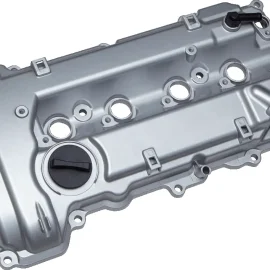
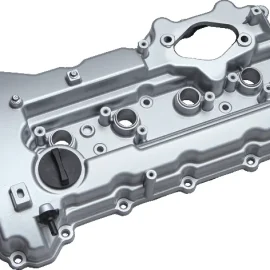
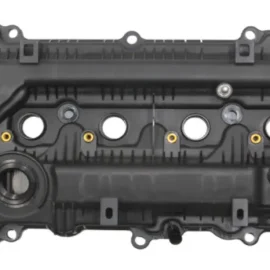
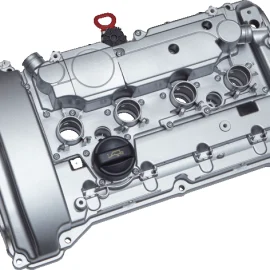
The primary purpose of engine valve cover screw grommets is to provide uniform downward pressure on the valve cover.Most modern engines use a “load-limiting” bolt design.This means the bolt reaches a stop before it crushes the gasket entirely.Therefore,the rubber grommet acts as a spring.It pushes the cover down against the cylinder head to create a tight seal.Without this tension,the main gasket cannot prevent oil from escaping.Additionally,these grommets seal the actual bolt holes in the valve cover itself.
The Engineering Behind Valve Cover Screw Grommets
The Dual Functions of Valve Cover Screw Grommets
| Function | Benefit to Engine | Potential Issue if Missing |
|---|---|---|
| Pressure Application | Ensures the main gasket stays compressed | Massive oil leaks along the edges |
| Vibration Dampening | Prevents mounting bolts from backing out | Loose cover and internal component wear |
| Bolt Hole Sealing | Stops oil from seeping up the bolt threads | Oil pools on top of the valve cover |
| Thermal Expansion | Allows parts to grow and shrink with heat | Cracked plastic or metal covers |
Consequences of Damaged Valve Cover Screw Grommets
Ignoring worn valve cover screw grommets can lead to several frustrating and expensive problems.Firstly,you will notice a persistent smell of burning oil.This happens because oil seeps through the bolt holes and drips onto the hot exhaust manifold.Secondly,your engine may develop a vacuum leak.Modern PCV systems rely on a sealed crankcase to manage internal air pressure.If air enters through a leaky grommet,your engine computer will struggle to maintain a steady idle.
Risk of Spark Plug Fouling
In some engine designs,a failure in the valve cover screw grommets allows oil to enter the spark plug wells.When oil fills these tubes,it can short out the ignition coils.This leads to engine misfires,poor fuel economy,and a “Check Engine” light.Moreover,the oil can degrade the rubber boots on your spark plug wires.As a result,a simple rubber seal failure turns into a complex electrical repair.Therefore,replacing these grommets is a cheap way to avoid high-cost diagnostic fees.
Symptoms and Other Engine Problems
| Symptom | Faulty Valve Cover Screw Grommets | Blown Head Gasket |
|---|---|---|
| Oil Leak Location | Top of the engine/bolt heads | Between block and head |
| Exhaust Smoke | White smoke from engine bay (burning oil) | White smoke from tailpipe (coolant) |
| Engine Performance | Slight rough idle or misfires | Overheating and power loss |
| Coolant Condition | Clean and green/orange | Milky or “chocolate milk” appearance |
Materials Used in Modern Sealing Grommets
Manufacturers use specific synthetic rubbers to create valve cover screw grommets.The most common material is Nitrile (NBR),which offers good resistance to oil and fuel.However,many high-performance vehicles use Viton or Silicone.Viton is superior because it can withstand temperatures exceeding 200°C without hardening.Silicone is also popular for its flexibility in extreme cold.Consequently,you should always check your vehicle’s specifications before buying replacements.Using the wrong material may cause the grommets to melt or crack prematurely.
When to Replace Your Valve Cover Screw Grommets
You should check your valve cover screw grommets every time you perform an oil change.Look for rubber that feels “brittle” or hard to the touch.New grommets should be soft and pliable like a pencil eraser.If they feel like hard plastic,they have lost their ability to seal.Additionally,look for “flattened” grommets.Over years of heat cycles,the rubber loses its height and no longer provides downward tension.Consequently,the valve cover will feel slightly loose even if the bolts are tight.
Visual Cues and Physical Tests
- Cracking:Look for small “spider-web” cracks on the surface of the rubber.
- Oil Seepage:Check for wet,grimy buildup specifically around the base of the bolt.
- Deformation:Compare a used grommet to a new one;failed ones often look squashed.
- Hardness:Press your fingernail into the rubber.If it leaves no mark,the rubber is too hard.
Grommet Replacement Checklist
| Step | Action | Why It Matters |
|---|---|---|
| 1. Inspect | Check for cracks and hardness | Identifies early failure points |
| 2. Clean | Wipe the bolt holes and cover surface | Prevents dirt from breaking the new seal |
| 3. Match | Ensure the new grommet fits the bolt snugly | Avoids loose fitments and leaks |
| 4. Torque | Tighten bolts to exact manufacturer specs | Prevents crushing the new rubber |
| 5. Monitor | Check for leaks after the first 50 miles | Confirms the repair was successful |
How to Install Valve Cover Screw Grommets Properly
The installation of valve cover screw grommets is straightforward but requires patience.First,remove the valve cover bolts one by one.You might need a small screwdriver to pry the old,hardened rubber off the bolt.Be careful not to scratch the metal surface of the bolt or the cover.Next,slide the new grommet onto the bolt.Some technicians use a tiny drop of clean engine oil to help the rubber slide into place.Finally,tighten the bolts in the specific sequence recommended by your car’s manual.
Contact Us Now
- RM901 No.22 Tangjiaqiao Road Wenzhou China
- +86 138 1973 9327
- [email protected]
- https://www.autosparesupplier.com/