
Should I Sand Blast Aluminum Valve Cover?
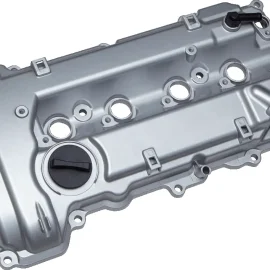
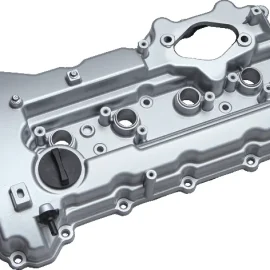
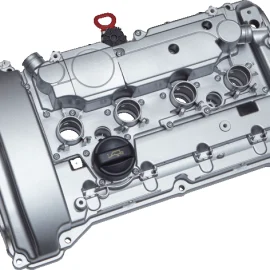
You should sand blast your aluminum valve cover if you want to remove tough oxidation and old paint quickly. This mechanical cleaning method creates a perfectly clean surface for new paint or custom powder coatings.But before using a pneumatic sandblasting gun,you must understand the correct operating procedures.Failure to do so can easily cause the fragile automotive metal to deform or become damaged due to excessive media pressure.In addition,if cleaning is not done properly,residual abrasive particles may eventually damage the entire engine block.
Core Pros and Cons to Sand Blast an Aluminum Valve Cover
Preparing an aluminum valve cover requires careful consideration of all advantages and disadvantages.Blasting strips away years of baked-on road grime within a few minutes.Compared to the tedious process of manual sanding,it saves valuable time.It can also reach into metal crevices that ordinary sandpaper cannot access.
However,harsh media can erode the soft aluminum alloy rapidly.You must control your air pressure setting very carefully.Purchasing professional blasting equipment requires a significant financial investment up front.If you use a local workshop,verify their experience with soft non-ferrous metals first.
| Operational Advantages | Engineering Disadvantages |
|---|---|
| Removes thick oxidation layers within minutes | Soft aluminum surfaces can gouge easily |
| Reaches deep into complex cooling fins | Requires expensive pneumatic machinery and safety gear |
| Creates an ideal texture for paint adhesion | High risk of dimensional warping from intense heat |
| Cleans away stubborn oil sludge effortlessly | Creates loose grit debris that can contaminate engines |
Get A Quote Now
Major Risks When You Sand Blast an Engine Valve Cover
You face several engineering challenges when you choose to sand blast an engine valve cover at home.Aluminum reacts differently to high-pressure impacts compared to heavy cast iron blocks.You must recognize the specific mechanical dangers before pulling the trigger.
High air pressure generates intense localized friction heat on the thin metal shell.The metal can warp out of shape quickly.A warped cover will ruin the critical gasket seal permanently.Keep your pressure low to avoid structural distortion.
Most modern covers feature complex internal oil baffles that trap debris easily.These baffles protect your engine from oil consumption during normal operation.Loose blasting grit can hide inside these channels securely.This hidden grit will enter your engine oil loop later and cause catastrophic bearing failure.
Directing aggressive media at the flat mating flange can create deep microscopic craters.Your new rubber or cork gasket will struggle to seal properly.Oil will weep past these uneven pits constantly under pressure.Thus,you must protect these flat areas during the cleaning process.
Direct media impacts can flatten or erase the soft internal aluminum threads easily.The mounting bolts will fail to tighten correctly during final reassembly.Always insert old spark plugs or junk bolts to protect these critical openings completely.
Choosing the Right Media for Your Aluminum Valve Cover
Choosing the correct abrasive media determines your ultimate project success.You should never use aggressive coarse sand on soft aluminum components.Coarse sand creates deep,ugly gouges that ruin the smooth factory appearance.Instead,you must select fine,delicate materials like glass beads or crushed walnut shells.These smart materials clean the surface thoroughly without removing the underlying structural metal.
Abrasive Media Comparison for Soft Alloys
| Media Type | Relative Hardness Level | Surface Finish Result | Ideal Application |
|---|---|---|---|
| Coarse Silica Sand | Extremely High | Deeply gouged and ruined | Cast iron exhaust manifolds only |
| Glass Beads | Moderate | Beautiful satin sheen | Raw aluminum restoration |
| Walnut Shells | Low / Soft | Clean matte texture | Delicate vintage components |
| Aluminum Oxide Grit | High | Rough textured profile | – |
Monitor your operating distance closely while spraying.Hold the blasting gun approximately eight to twelve inches away from the metal.This safe distance prevents the concentrated force from cutting too deeply into one specific area.Move your hand in steady,sweeping motions across the entire component to ensure uniform texture.
Step-by-Step Guide to Safely Sand Blast Automotive Metal
First,remove the component from your engine bay completely.Never attempt to blast any parts while they remain attached to the vehicle.Next,spray the metal with a heavy-duty degreaser to remove liquid oil.Abrasive media will clump together instantly if it touches wet grease patches.
Subsequently,mask all critical sealing surfaces with heavy-duty duct tape.This protective barrier shields the flat gasket track from unnecessary media wear.Then,place the aluminum valve cover inside a sealed blasting cabinet safely.Set your air compressor regulator to roughly forty to sixty PSI maximum.Hold the blasting nozzle at a steady forty-five-degree angle to deflect the force.Move the gun continuously across the metal to avoid localized hotspots.Finally,shake off the loose dust before opening the cabinet doors.
Essential Post-Blasting Maintenance for Every Engine Valve Cover
You must clean the engine valve cover aggressively after completing the blasting process.Never skip this final closed-loop wash stage under any circumstances.
Post-Blasting Cleaning Protocol Checklist
| Cleaning Sequence | Material Used | Technical Objective |
|---|---|---|
| First Pass | High-pressure compressed air | Blows out loose grit from open channels |
| Second Pass | Hot soapy water and nylon brush | Dissolves remaining dust film layer |
| Third Pass | Brake cleaner solvent flush | Degreases the internal baffle pathways completely |
| Final Pass | Microfiber towel and air dry | Prepares the raw metal for immediate coating |
Flush the internal baffle pathways repeatedly until the running water looks completely clear.Afterward,inspect every single bolt hole with a bright flashlight.If you find trapped media,clear it out using a small metal pick.Finally,apply a premium protective coating to prevent immediate surface oxidation.This discipline ensures your vehicle looks great and runs safely for years to come.
Contact Us Now
- RM901 No.22 Tangjiaqiao Road Wenzhou China
- +86 138 1973 9327
- [email protected]
- https://www.autosparesupplier.com/