
The Culprit Behind Truck Parking AC Self-Ignition
In the sweltering summer heat,many truckers opt to install auxiliary air conditioners.However,while enjoying the comfort they provide,these units may also harbor significant safety hazards,potentially leading to the severe risk of Parking AC Self-Ignition.Have you noticed that cases of vehicle spontaneous combustion seem to occur every year?
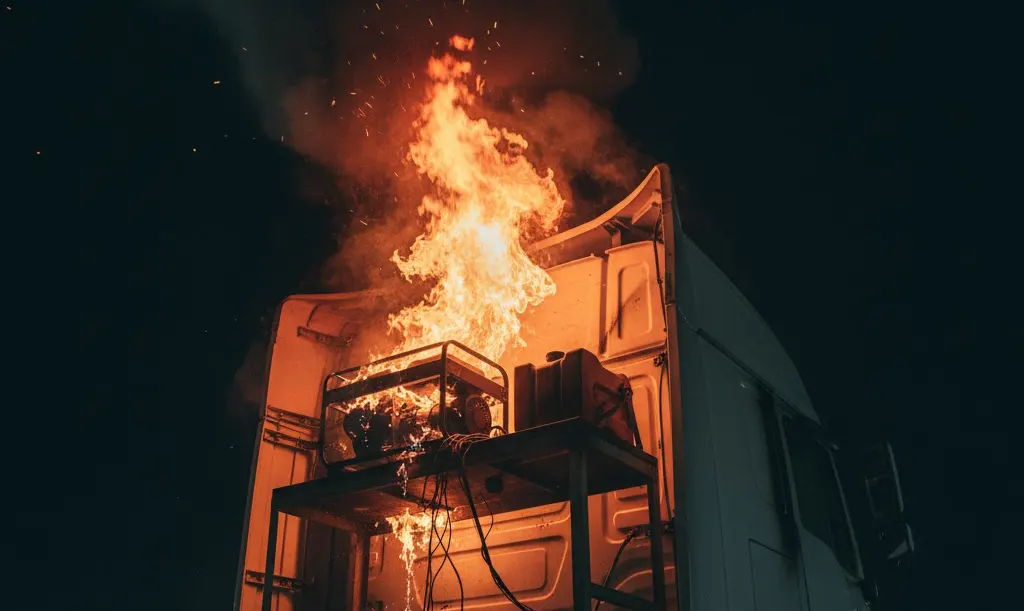
The primary culprit behind these incidents is the gasoline generators many truckers install to power their parking air conditioners.Fuel leaks can occur,potentially causing the generator to ignite and catch fire.
In fact,every summer when the topic of air conditioner generators comes up,truckers immediately associate it with all sorts of problems.
For instance,insufficient engine power for the AC,excessive noise,excessive fuel consumption,and other messy issues.As shown in the video above,if handled carelessly,air conditioner generators can even trigger spontaneous combustion.
Get A Free Fast Quote
Why Generators Trigger Parking AC Self-Ignition
Understanding the mechanism behind parking AC self-ignition is crucial, and it often begins with generator quality.
First,truck drivers typically source gasoline generators through various channels.However,some drivers opt for cheaper generators to save money,which are often low-quality or even counterfeit products.These generators feature uncertified components,making them prone to malfunctions and,in severe cases,spontaneous combustion.
Many truck drivers’ vehicles may not have been originally equipped with air conditioning,with most units being retrofitted later.This often results in haphazard wiring connections,including the use of substandard wires.Compounded by the absence of fuse protection,this setup is highly prone to spark generation.Any oil leakage can then become a major hazard.
Furthermore,loose connections at the generator’s positive and negative terminals,short circuits to ground,or excessive output current can generate high-temperature sparks.When these come into contact with flammable,volatile gasoline,vehicle spontaneous combustion is almost inevitable.
Based on previous observations,many truckers neglect their generators entirely after installation,adopting a hands-off approach.However,trucks operate in harsh environments with extreme vibration.Over time,fuel lines,circuits,and tanks can wear out or age,leading to fuel vaporization or leaks.
Since generators are typically mounted on the workbench behind the cab,extremely close to the exhaust pipe,fuel leaks can easily ignite upon contact with the high-temperature exhaust.Another contributing factor is electrical interference between wiring and the vehicle frame,which can cause wear,short circuits,or sparks.If fuel leaks are present, this creates a high risk of electrical fires, contributing to parking AC self-ignition.
Preventing Parking AC Self-Ignition
First,always choose a branded generator—never skimp on cost.Second,reinforce wiring in areas prone to frame interference with protective measures like rubber blocks,electrical tape,and fuses to prevent wear and sparking.
Additionally,it is advisable to hire a professional technician for modifications to ensure proper wiring.Finally,regularly inspect the generator,especially critical areas like the fuel system,fuel lines,and fuel tank.Address any faults promptly—do not compromise.After all,vehicle fire damage can result in far greater losses.
Whether using a parking air conditioner or a standard unit with an external compressor,you’ll need larger batteries to meet both the vehicle’s and the AC system’s power demands.The first step in modifying your AC is to increase the battery amp-hour rating.While AGM lead-acid batteries offer superior endurance,they are quite expensive and may not be cost-effective.
It’s important to note that before opting for a battery-powered design,truckers should first confirm their vehicle’s battery capacity and whether a parking air conditioner can be installed with no or minimal damage.This prevents issues like complete vehicle power loss or excessive power consumption.
Currently,with continuous advancements in battery charging and discharging technology,meeting truckers’ needs for 6-10 hours of nighttime rest is no longer an issue.Moreover,battery-powered designs operate more quietly,producing virtually no noise.This provides a more comfortable resting environment for both truckers themselves and others during nighttime hours.
Modifying Your Generator? You Might Void Your Warranty!
Although most new vehicles now come equipped with factory-installed parking air conditioning,older models typically lack this feature,making retrofitting a common practice.To address this,we consulted service station technicians about the potential impacts of installing aftermarket parking air conditioning.
First,as mentioned earlier,generators of varying quality,improper wiring connections,and lack of routine inspections can easily lead to hazards.In some cases,mechanics with insufficient expertise may design faulty air conditioning circuits that interfere with the vehicle’s original electrical system,causing severe malfunctions in the fuse box—resulting in wasted money.
More critically,as reported by heavy-duty truck service stations,some manufacturers’ warranty policies explicitly prohibit unauthorized generator installations or wiring modifications.Issues arising from such modifications may result in outright warranty denial.
It’s clear that installing a parking air conditioner is no small matter—it could affect the safety of our property and even our lives,as well as those around us.While these roadside installations may be cheap,the process often comes with a host of safety hazards.Don’t lose sight of the bigger picture by focusing on minor savings.
Additionally,fellow truckers,after installation,don’t become complacent.Regularly inspect and maintain your vehicle.Earning money is tough these days,so it’s best to avoid risky ventures.After all,if something goes wrong,the consequences could far outweigh any benefits.
Contact Us Now
- RM901 No.22 Tangjiaqiao Road Wenzhou China
- +86 138 1973 9327
- [email protected]
- https://www.autosparesupplier.com/