
What Causes The Valve Cover Rattling Noise?
Hearing a persistent valve cover rattling noise can be alarming for any driver.This sound often resembles metal fragments clattering inside a tin can.Not only does it disrupt the driving experience,but it also signals potential engine trouble.Fortunately,the issue is likely not serious and usually stems from loose bolts or worn rubber seals.We’ll help you identify the root cause and eliminate the noise.
The Most Common Reason: Loose Hardware
The simplest explanation for a engine valve cover rattling sound is loose bolts.Your engine vibrates constantly while running.Over time,these vibrations can loosen the bolts that hold the cover down.
When bolts become loose,the cover plate cannot remain securely fastened.It will collide with the cylinder head,producing a distinct metallic clattering sound.This phenomenon is particularly common in older vehicles.Additionally,the engine’s heating and cooling cycles cause metal expansion and contraction,and this natural movement gradually loosens the bolts.
Get A Quote Now
Internal Causes of Valve Cover Rattling
Sometimes,the cover is tight,but the noise persists.The problem might be inside the component itself.
Broken oil baffle plates Most valve covers contain a metal plate known as an oil baffle plate.Manufacturers secure this plate to the cover’s interior via riveting or spot welding to prevent engine oil from being drawn into the ventilation system.If the rivets fail,the metal plate detaches and rattles loose inside the cover,producing a harsh,irregular valve cover clatter.
Worn rubber grommet bolts often pass through the rubber grommets.These rubber washers provide cushioning.Over time,high temperatures cause the rubber to harden and become brittle.As the grommets shrink,the bolts can no longer securely fasten the cover plate.Even if the bolts feel tight,the cover plate may still rattle and make a clicking sound.
The PCV Valve: A Common False Alarm
Before removing any bolts,inspect the crankcase positive crankcase ventilation (PCV) valve.This valve is located directly on top of the cover plate.A faulty PCV valve may produce a fluttering or clicking sound.
Because the valve is attached to the cover,the sound travels.It makes the entire unit vibrate.This mimics a valve cover rattling issue perfectly.
Quick Test:With the engine idling,pinch the rubber hose connected to the PCV valve.If the noise stops or changes pitch,the valve is the culprit.Replacing a cheap PCV valve is much easier than replacing the whole cover.
Is It Valve Tapping or Valve Cover Rattling?
It is essential to distinguish between cover plate vibration and valve impact against the cover plate.If valve clearance is excessive,the rocker arm may move excessively and potentially strike the bottom of the valve cover.This sound is typically rhythmic and accelerates with increasing engine speed.In contrast,genuine valve cover rattling is often more random and closely associated with vibration.
Identifying Engine Top-End Noises
| Sound Description | Likely Culprit | When It Happens | Urgency |
|---|---|---|---|
| Random Metal Rattle | Loose Cover / Broken Baffle | At idle or specific RPMs | Medium |
| Rhythmic Ticking | Valve Lash / Lifter Issue | Increases with engine speed | High |
| Deep Knocking | Rod Bearing Failure | Under load / Acceleration | Critical |
| Light Fluttering | PCV Valve | At idle | Low |
Pro Tip:Using a Mechanics Stethoscope
To confirm the location of the valve cover rattling,use a stethoscope.If you do not have one,use a long screwdriver.Place the metal tip on the valve cover bolt.Place the handle against your ear.
If the sound is sharp and loud at the bolt,the vibration is likely internal.If the sound is duller,check the external brackets.Sometimes,a loose wire harness bracket hitting the cover mimics a valve cover rattling issue.
How to Fix a Valve Cover Rattling Issue
When tightening bolts,use a torque wrench and never rely on feel.Most valve cover bolts require extremely low torque,typically 8 to 10 Newton meters (Nm).Over-tightening will cause the cover to crack or the bolts to break.
Critical Step:Never tighten bolts in a circular pattern,as this may cause metal deformation.Instead,use the “inner-to-outer” method to eliminate valve cover rattling.
- Start with the bolts in the center of the cover.
- Move to the outer corners in a crisscross pattern.
- Tighten them gently in steps. Do not go to full torque immediately.
Replace the grommets if the bolts bottom out but the cover is loose,replace the rubber grommets.This restores the clamping force.
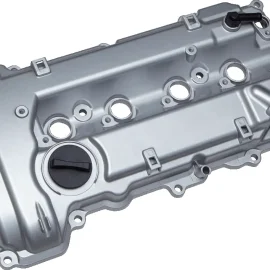
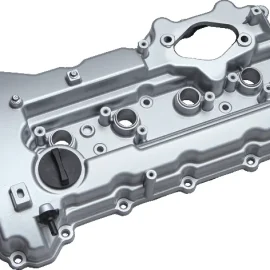
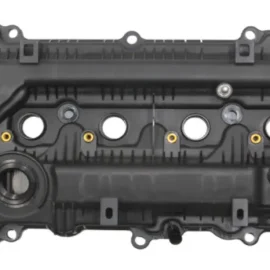
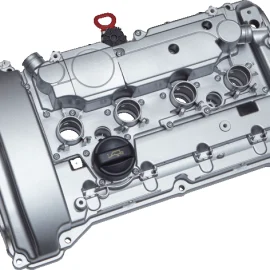
Replace the valve cover if the internal baffle is broken,you cannot easily repair it.Welding it back is risky.The debris could damage the engine.The best fix for this type of valve cover rattling is a full replacement.
Cost Analysis: DIY vs Professional Repair
| Repair Type | Parts Cost (DIY) | Professional Labor Cost | Difficulty Level |
|---|---|---|---|
| Tightening Bolts | $0 | $50 – $100 (Diagnosis) | Very Easy |
| Replacing Grommets | $10 – $20 | $100 – $150 | Easy |
| Replacing Valve Cover | $50 – $200 | $200 – $450 | Moderate |
| Adjusting Valve Lash | $20 (Gasket) | $300 – $600 | High Skill |
Preventing Future Valve Cover Rattling
- Regular Inspection:
Check the tightness of bolts during each oil change. - Listen to Your Vehicle:
If you hear unusual noises,investigate immediately. - Use Quality Parts:
Avoid cheap aftermarket covers with weak welded seams.Always choose genuine parts or high-quality replacements to prevent recurring valve cover rattles.
Contact Us Now
- RM901 No.22 Tangjiaqiao Road Wenzhou China
- +86 138 1973 9327
- [email protected]
- https://www.autosparesupplier.com/