
Can You Powder Coat Aluminum Valve Cover?
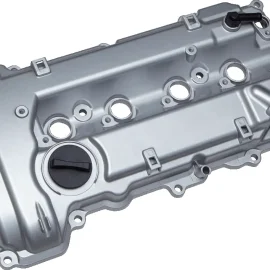
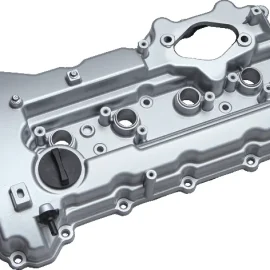
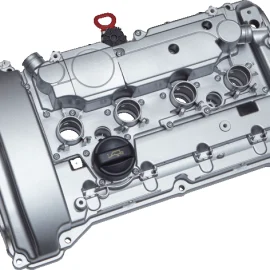
You can powder coat an aluminum valve cover safely to achieve a durable,beautiful finish for your vehicle engine bay.First,this process provides incredible protection against harsh automotive fluids and intense heat cycles.It completely transforms a dull engine compartment into a beautiful showpiece.Many car enthusiasts choose this specific modification for long-term styling.
You must follow precise technical guidelines during execution to ensure a flawless bond.Otherwise,the protective layer can bubble or peel away prematurely.Let us examine the best professional methods to complete this project correctly.
Why You Should Powder Coat An Aluminum Valve Cover
Standard factory automotive parts oxidize rapidly when exposed to road salt and ambient moisture continuously. Specifically,this chemical reaction creates an ugly,chalky gray appearance on your cast metal shell.Fortunately,a high-quality thermoplastic or thermoset polymer layer blocks this environmental damage completely.
This thick barrier resists scratching much better than traditional liquid paint formulations.You can wipe away oil spills easily without damaging the beautiful custom color underneath.It withstands temperatures up to four hundred degrees Fahrenheit comfortably.
Your specialized engine valve cover retains its brilliant color across thousands of highway miles.This high thermal threshold prevents the surface from blistering under heavy load.Thus,your engine remains protected against corrosion indefinitely.
Comparing Performance of Engine Bay Finishes
| Finish Performance Criteria | Industrial Powder Coating | Traditional Liquid Painting |
|---|---|---|
| Mechanical Scratch Resistance | Outstanding resilience | Highly prone to chipping |
| High Thermal Tolerance | Up to 400 degrees Fahrenheit | Flakes under extreme heat |
| Chemical Fluid Shielding | Resists oil and fuel spills | Dissolves from strong solvents |
Get A Quote Now
Essential Surface Preparation Before Coating
First,you must understand that aluminum is an extremely porous metal alloy.Specifically,old engine oil sinks deep into the microscopic pores over years of heavy operation.If you skip deep chemical cleaning,these trapped oils will ruin your new finish.
During the oven baking phase,the hidden oil expands and forces its way out.This phenomenon creates ugly bubbles and pinholes in the fresh plastic layer.You must bake the bare metal shell first without any powder applied.Professional technicians call this critical step thermal outgassing.
Next,spray the entire part with a heavy-duty solvent degreaser to remove surface grease.Subsequently,use fine media blasting to strip away old paint and rough oxidation layer completely.This process creates a clean,textured surface that helps the dry powder stick permanently.A well-blasted surface guarantees superior mechanical adhesion for the incoming polymer coating.
Step-by-Step Guide to Powder Coat Engine Components
First,apply high-temperature silicone masking tape over all sensitive gasket tracks and internal threads.You must protect these critical sealing areas from receiving any dry powder accumulation.If powder enters the threads,you will cross-thread your mounting bolts during final reassembly.Next,attach the negative grounding cable from your electrostatic gun system directly to the bare metal.This connection ensures the particles stick evenly to the metal surface.
Subsequently,spray the dry electrostatic powder over the aluminum valve cover smoothly from ten inches away.The charged powder clings tightly to the grounded metal shell due to static electricity.Ensure you achieve uniform thickness across every tight corner and complex cooling fin.
Finally,place the coated component carefully inside a dedicated industrial curing oven.Bake the part at four hundred degrees Fahrenheit for approximately twenty minutes to melt the powder.This thermal reaction creates a smooth,continuous plastic shell across the entire metal component.
Troubleshooting Outgassing Issues
This frustrating problem occurs when you cut corners during the initial thermal outgassing phase. Specifically,trapped oil vapor escapes while the liquid plastic is cooling inside the hot oven.To fix this issue,sand down the flawed area completely using fine sandpaper.Subsequently,clean the bare metal with acetone and apply a specialized outgassing-forgiving powder compound.
Deep internal corners often experience the Faraday cage effect during the electrostatic spraying process.This electrical phenomenon repels incoming powder particles away from deep recesses automatically.To overcome this challenge,reduce the voltage setting on your electrostatic spray gun slightly.Angle the nozzle directly into the deep pocket first before coating the flat outer surfaces.
Brittle coatings usually indicate that you overbaked the engine component inside the curing oven.Leaving the part in extreme heat for too long degrades the structural polymer chains.Remember,always use a reliable digital infrared thermometer to monitor actual metal temperatures accurately.Keep the oven temperature stable to guarantee a flexible,impact-resistant finish.
If you forget to mask the internal threads,powder will bake inside the bolt holes.Do not force the mounting bolts in,because you will snap the hardware easily.Instead,use a correct thread-chasing tap tool to cut away the hardened plastic safely.This mechanical cleaning method restores original thread tolerances without damaging the cylinder head.
Curing Temperatures for an Aluminum Valve Cover
Curing Thermal Profiles for Cast Aluminum Alloys
| Powder Chemistry Base | Required Metal Temperature | Mandatory Baking Duration | Target Finish Characteristic |
|---|---|---|---|
| Standard Polyester TGIC | 400 degrees Fahrenheit | 15 to 20 minutes | High gloss and UV shielding |
| High-Performance Polyurethane | 360 degrees Fahrenheit | 20 minutes | Outstanding fuel resistance |
| Specialized Epoxy Base | 375 degrees Fahrenheit | 15 minutes | Maximum impact toughness |
Long-Term Maintenance of Coated Surfaces
Apply a thin layer of synthetic wax annually to protect the surface from grime.This simple maintenance habit ensures your customized engine bay remains looking pristine for years.Ultimately,choosing to powder coat your hardware guarantees excellent durability under the hood.You enjoy clean aesthetics and robust protection across every journey.
Pre-Installation Inspection Checklist for Coated Parts
| Inspection Checkpoint | Correct Technical Status | Operational Justification |
|---|---|---|
| Gasket Groove Track | Completely free of powder | Ensures an absolute airtight oil seal |
| Mounting Bolt Flanges | Perfectly flat and smooth | Prevents uneven stress cracking on aluminum |
| Interior Underside Shell | Zero overspray residue present | Prevents plastic flakes from entering engine oil |
Contact Us Now
- RM901 No.22 Tangjiaqiao Road Wenzhou China
- +86 138 1973 9327
- [email protected]
- https://www.autosparesupplier.com/