
What is The Best Paint For A Valve Cover?
You must find the absolute best paint for a valve cover to protect your metal permanently.Choosing the wrong paint can easily cause irreparable damage to your expensive car parts;for example,ordinary household spray paint cans will quickly break down under the extreme heat of an engine.Flaking paint particles can easily contaminate critical engine oil passages,so you must use a specialized valve cover paint.
Why You Need Specialized Paint For A Valve Cover
The metal surface directly above the combustion chamber becomes extremely hot.Furthermore,boiling engine oil continuously heats the inner metal casing while the vehicle is in motion.You must always purchase a specialized high-temperature valve cover coating,as ordinary automotive paints cannot withstand the harsh thermal conditions inside the engine compartment.A special ceramic compound can withstand extreme temperatures of up to 500 degrees Celsius,and its unique chemical formulation completely prevents unsightly peeling and dangerous flaking.
Coating Types and Heat Resistance
| Paint Chemical Type | Maximum Heat Resistance | Recommended Automotive Use |
|---|---|---|
| Standard Auto Enamel | 200°F (93°C) | Exterior body panels only |
| High-Heat Engine Enamel | 500°F (260°C) | Engine blocks and top covers |
| VHT FlameProof Coating | 2000°F (1093°C) | Hot exhaust headers strictly |
Understanding Engine Heat And Your Valve Cover
Engine temperature determines your choice of materials throughout the repair project.Daily commuting generates continuous radiant heat across the entire engine block.As temperatures fluctuate from day to day,the valve cover also expands and contracts.Inferior paint is prone to cracking during these rapid cycles of metal expansion.High-temperature-resistant ceramic compounds are able to conform perfectly to the natural expansion of automotive metals,thereby preventing microscopic cracks from eventually ruining your beautiful custom paint job.It is precisely for this mechanical reason that high-quality automotive coatings contain flexible resins.
Get A Quote Now
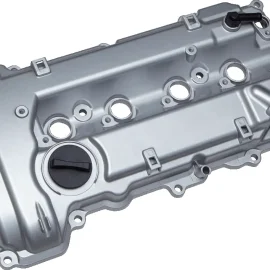
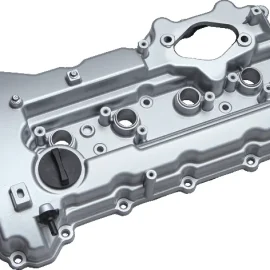
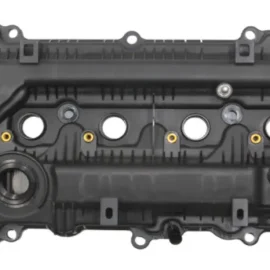
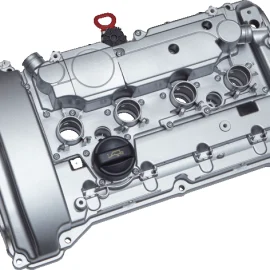
We are professional engine valve cover supplier in China. We offer valve covers for a variety of brands, such as Mercedes-Benz, BMW, Ford, and more. Click the button to browse and get a free, quick quote.
Top Paint For A Valve Cover Options
Today, there are many high-quality paints available on the market for valve covers.Sprays of textured paint can give vintage engines a classic,textured look and effectively conceal unsightly metal casting defects.High-gloss ceramic engine enamel provides an extremely smooth,shiny surface that makes wiping off grease a breeze.
Best Finish Styles Compared
| Coating Finish Style | Visual Appearance | Primary Maintenance Benefit |
|---|---|---|
| Classic Wrinkle Finish | Heavily textured and matte | Hides deep metal scratches easily |
| High-Gloss Ceramic | Very shiny and smooth | Extremely easy to wipe clean |
| Modern Flat Matte | Flat with zero reflection | Reduces harsh engine bay glare |
How To Apply Paint For A Valve Cover Perfectly
Proper surface preparation guarantees a beautiful and highly durable final painting result.
- First,clean the metal using a strong chemical automotive degreaser thoroughly.
- Next,scuff the entire valve cover using 320-grit wet sandpaper very evenly.Creating these microscopic scratches helps the new primer stick permanently.
- Apply three thin coats of high-temperature engine primer very patiently.Wait exactly ten minutes between every single primer coat for drying.Thus, you create a perfectly solid foundation for your final color coats.
- Finally,spray the colored high-heat paint for a valve cover incredibly smoothly.Never rush the curing process before reinstalling the part onto your engine.
Preventing Common Liquid Coating Failures
Omitting critical preparation steps will almost immediately result in severe chemical adhesion failure.Spraying directly onto hidden oil stains will cause fish-eye bubbles to appear in the paint;the metal surface must be wiped down with pure acetone before spraying.Applying the paint too thickly will result in unsightly drips;be sure to apply multiple thin coats rather than a single thick coat.It is best to place the valve cover in a warm oven to cure the paint and ensure it sets properly.
Common Application Mistakes
| Preparation Mistake Made | Negative Visual Result | How To Prevent The Error |
|---|---|---|
| Spraying over trapped oil | Fish-eye bubbling in paint | Wipe metal with pure acetone |
| Spraying coats too heavy | Large liquid drip marks | Use three very thin coats |
| Skipping the base primer | Final color flakes off | Use high-heat engine primer |
Maintaining Your Fresh Engine Bay Aesthetic
To ensure that your newly coated engine components retain their luster over time,you must maintain them properly.Never spray strongly acidic wheel cleaners onto painted engine components.Strong acids will cause the glossy ceramic coating to lose its shine almost immediately upon contact.
Please use a mild automotive car wash solution and a soft microfiber cloth for cleaning.This effectively protects the delicate chemical coating surface from unsightly fine scratches.As a result,the valve cover coating you’ve carefully selected will retain its dazzling luster for many years.Regular,gentle cleaning prevents heavy road grime from penetrating the coating.
Contact Us Now
- RM901 No.22 Tangjiaqiao Road Wenzhou China
- +86 138 1973 9327
- [email protected]
- https://www.autosparesupplier.com/
Share