
5 Reasons for Poor Parking AC Cooling Performance
Parking air conditioning serves as a “mobile cooling pod” for lorry drivers and long-distance motorists,providing a refreshing environment during rest stops.However,when the vents emit warm air,it often causes considerable frustration.This not only compromises the quality of rest but may also indicate underlying equipment faults.Understanding the root causes of Poor Parking AC Cooling is essential for maintaining driver comfort and system integrity.
Refrigerant Malfunctions: A Primary Cause of Poor Parking AC Cooling
Refrigerant serves as the lifeblood of air conditioning systems,circulating through four core components:the compressor,condenser,expansion valve,and evaporator.Insufficient refrigerant levels are a primary cause of Poor Parking AC Cooling, as the compressor lacks the necessary ‘raw material’ to adequately compress gas, resulting in diminished heat dissipation efficiency from the condenser.For instance,following a refrigerant leak in a certain brand’s parking air conditioner,the outlet air temperature rose from 5℃ to 25℃, with cooling capacity declining by 80%.
Excess refrigerant similarly disrupts system equilibrium.When charge exceeds 110% of the air conditioning system’s volume,liquid refrigerant may clog the expansion valve,causing insufficient refrigerant within the evaporator.This can be assessed by observing the sight glass of the dryer canister:persistent bubbling indicates insufficient refrigerant,while a calm liquid surface accompanied by frosting on the high-pressure line suggests overcharging.
Regularly inspect refrigerant levels,replenishing when deficient and venting excess refrigerant or compressor oil when overcharged.Ensure added refrigerant and compressor oil meet quality standards to prevent clogged filters from inferior products,which impair cooling performance.

Mechanical Component Failures Leading to Poor Parking AC Cooling
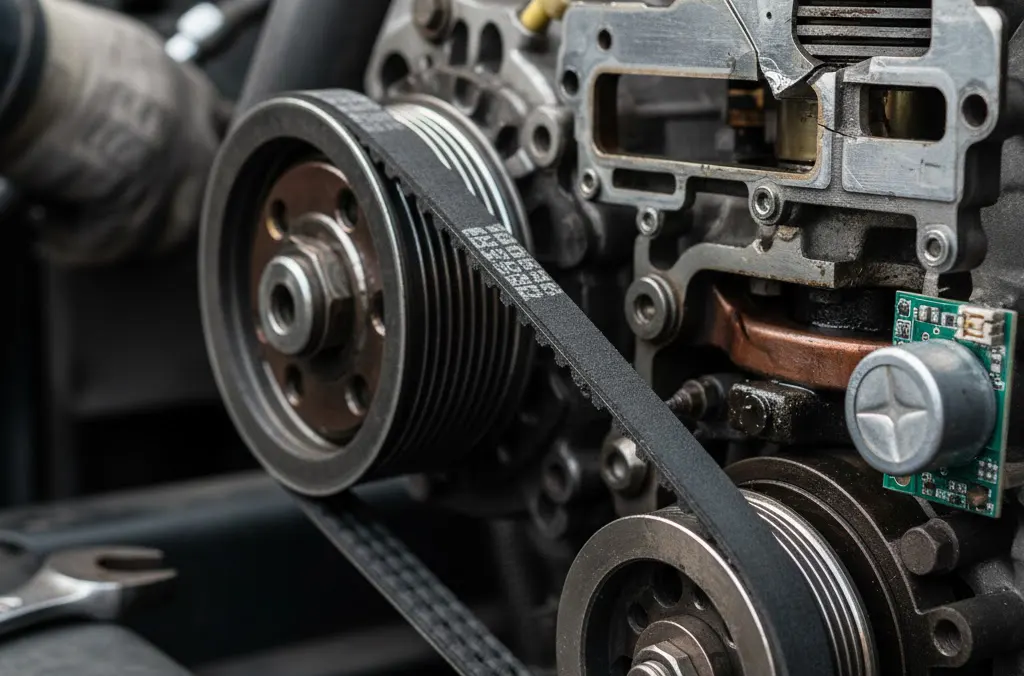
The compressor drive belt, acting as the “bridge” for power transmission,directly impacts refrigeration efficiency.When belt slack exceeds 5mm,compressor speed drops by 30%-40%,resulting in insufficient refrigerant delivery.A maintenance case study demonstrated that replacing a slack drive belt reduced air outlet temperature from 18℃ to 7℃,significantly enhancing cooling performance.
Internal compressor faults warrant equal attention.Piston wear and valve plate fractures diminish compression ratios;one brand’s compressor exhibited a 40% cooling capacity decline after 50,000 kilometers due to valve plate ageing.Furthermore,excessive impurities in refrigeration oil form sludge that clogs filters;service station statistics indicate 20% of refrigeration failures stem from oil circuit blockages.
A slack drive belt causes compressor slippage and reduced transmission efficiency.Internal compressor damage may result from cylinder seizure or coil ageing.Capacitor faults impair compressor start-up and operation.
Regularly inspect the compressor drive belt and replace when necessary.Address internal compressor damage promptly through repair or replacement.Replace faulty capacitors with new units.
Untimely Cleaning And Maintenance
The condenser is a critical component for heat dissipation in air conditioning systems,and dust accumulation on the condenser surface significantly impairs cooling efficiency, often leading to Poor Parking AC Cooling..During prolonged driving or travel on dusty roads,the condenser surface readily collects dust and debris,leading to poor heat dissipation and consequently affecting the air conditioning’s cooling performance.
A cleaned condenser can enhance cooling efficiency by 25%-30%.It is recommended to flush the condenser with a low-pressure water jet every three months,avoiding high-pressure jets which may damage the fins.
Mould growth within the evaporator obstructs airflow.Upon disassembly,one brand’s air conditioning system revealed 60% surface mould coverage on the evaporator,reducing airflow by 40%.Specialized cleaning agents may be used for deep cleaning to restore airflow efficiency.
A blocked air filter impedes airflow and reduces cooling performance;obstructions in ducts or vents also impair air circulation and refrigeration.Regularly replace air filters to ensure unobstructed airflow;routinely inspect ducts and vents,promptly removing debris to maintain airflow.

Electrical Control Issues and How They Trigger Poor Parking AC Cooling
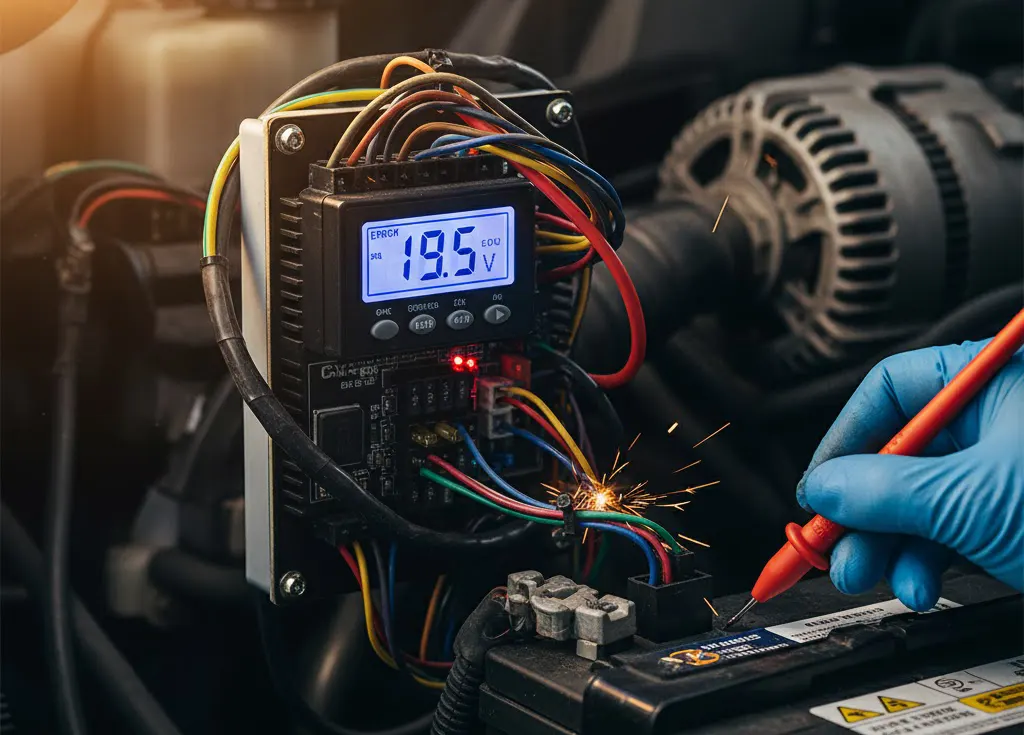
The voltage protection device acts as the “safety valve” for the parking air conditioner.When the battery voltage falls below 21V,the system automatically cuts off power to prevent over-discharge.Some truck drivers have reported that activating the air conditioner with 30% battery remaining triggers the protection after just 20 minutes of operation.In such cases,the battery’s health should be inspected;if internal resistance exceeds 10mΩ,replacement is necessary.
The temperature sensor, acting as the “eye” of refrigeration control,can cause system misjudgements when inaccurate.Should the ambient temperature sensor display a reading 5℃ higher than actual conditions,the air conditioning prematurely exits cooling mode.For one brand,sensor recalibration extended cooling duration by 40%.
Inspect power circuits and the alternator to ensure stable voltage.Should control module faults be detected,promptly engage a qualified technician for inspection or replacement of the control module.
Environmental And Usage Factor
High temperatures significantly reduce cooling efficiency.When external temperatures exceed 40℃,condenser heat dissipation efficiency drops by 30%.One experiment demonstrated that at 50℃,air conditioning cooling capacity decreases by 55% compared to 25℃.This can be mitigated by increasing the speed of the front radiator fan or using sunshades.
Vehicle sealing is equally critical.Tests indicate that for every 1mm increase in door gap,cold air loss rises by 8%.Regular inspection of door seals and sunroof sealing is recommended,with sealant reinforcers applied where necessary.
Contact Us Now
- RM901 No.22 Tangjiaqiao Road Wenzhou China
- +86 138 1973 9327
- [email protected]
- https://www.autosparesupplier.com/