
How to Clean Intake Manifold Without Removing It?
You can clean an intake manifold without removing it by using specialized chemical aerosol sprays.Over time,thick carbon deposits,oil mist,and dirt accumulate inside the intake manifold.Thick carbon deposits restrict airflow, reduce fuel efficiency,and cause sluggish throttle response.Removing the entire manifold requires hours of labor, expensive gaskets,and specialized tools,but chemical cleaners can dissolve stubborn carbon deposits while the engine is idling.Chemical cleaning can be performed on the vehicle without completely removing the engine, quickly restoring lost power.
Comparison of Cleaning Methods
| Cleaning Method | Labor Time | Average Cost | Cleaning Thoroughness |
|---|---|---|---|
| On-Car Chemical Spray | 30 – 45 Minutes | $20 – $50 | 70% – 85% Deposit Removal |
| Professional Induction Tool | 1.0 – 1.5 Hours | $120 – $250 | 85% – 95% Deposit Removal |
| Full Mechanical Teardown | 4.0 – 8.0 Hours | $400 – $900 | 100% Manual Scrape & Blast |
Why You Should Clean an Intake Manifold Without Removing It
Cleaning without removing the intake manifold saves time and money.At a professional repair shop, a complete engine teardown can take up to six hours.In contrast,an in-car chemical spray cleaning right at your doorstep takes less than an hour and eliminates the need to purchase replacement parts such as a new intake manifold gasket.
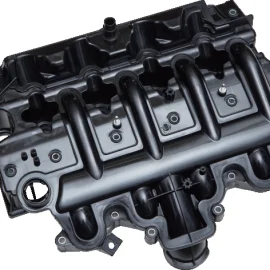
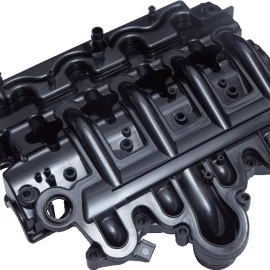
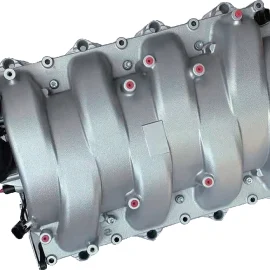
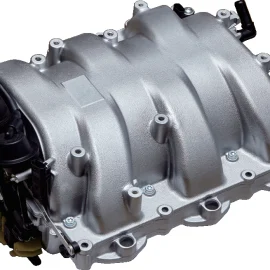
The chemical solvent softens stubborn carbon deposits and safely flushes them into the combustion chamber.But rest assured, modern cleaning agent formulations burn completely and will not damage the catalytic converter or oxygen sensors.As a professional intake manifold supplier,we recommend performing chemical cleaning regularly to keep the intake passages clear,thereby maintaining the engine’s low-end torque and fuel efficiency.Cleaning the intake manifold without disassembly saves money while ensuring engine performance.
Tools for On-Car Intake Cleaning
Required Tools and Chemical Specifications
| Tool / Material | Purpose | Target Specification / Recommendation |
|---|---|---|
| Dedicated Intake Cleaner | Dissolves carbon deposits safely | PEA-based aerosol spray (Sensors-safe) |
| Screwdriver / Socket Set | Loosens intake duct clamps | Standard 7mm/8mm socket or flathead |
| Safety Gear | Protects eyes and skin from chemicals | Eye goggles & chemical-resistant gloves |
| OBD-II Scan Tool | Monitors engine RPM & resets codes | Live data streaming capability |
How to Clean Intake Manifold Without Removing It Step-by-Step
- First,warm up the engine to its normal operating temperature.The warm engine surface activates the chemical solvent more quickly,allowing it to break down stubborn carbon deposits more effectively.
- Next,turn off the engine and disconnect the intake pipe behind the mass airflow sensor.But please be careful: never spray the chemical cleaner directly into or onto the precision mass airflow sensor upstream.Instead,insert the aerosol nozzle directly into the throttle body or a dedicated vacuum port.
- Start the engine and stabilize the idle at approximately 2,000 RPM.For two to three seconds, briefly spray the cleaner into the intake.Allow the engine to fully absorb the solvent,pausing briefly between each spray to prevent the engine from stalling.
- If the engine shakes violently,stop spraying immediately until the idle speed stabilizes completely.After using up one can of cleaner,turn off the engine and let it soak for fifteen minutes.This high-temperature soaking period will soften deep carbon deposits on the intake valve stems.
- Finally,reconnect the intake manifold,start the engine,and drive at high speed on the highway.Driving on the highway for ten minutes will thoroughly remove any dissolved carbon residue from the exhaust system.
Troubleshooting On-Car Cleaning Issues
| Issue During Cleaning | Root Cause | Immediate Practical Solution |
|---|---|---|
| Engine Stalls During Spraying | Spraying solvent too quickly | Pause spraying; hold engine at 2,000 RPM |
| Check Engine Light | Temporary misfire from rich spray | Clear P0300 code using an OBD-II scanner |
| Excessive White Exhaust Smoke | Chemical solvent burning off | Drive vehicle 10-15 miles |
Spray Cleaners vs Professional Induction Services
Aerosol cans cost less than $30 and are very popular among DIY enthusiasts.These products work exceptionally well on mild to moderate carbon buildup in vehicles used for daily driving.
Preventive Maintenance to Keep Intake Passages Clean
- Install a high-efficiency oil-vapor separator in the crankcase forced ventilation system;it captures oil mist and prevents it from entering the intake manifold and being baked onto the valves.
- Use high-quality synthetic motor oil with low volatility to reduce oil mist formation.Remember to replace the engine air filter regularly to prevent fine dust from mixing with oil mist in the intake air.
- Avoid frequent short trips,as they make it difficult for the engine to reach its normal operating temperature.This can lead to increased fuel consumption,worsened exhaust emissions,and accelerated engine wear.
Maintaining clean airflow pathways inside your engine guarantees maximum power and fuel efficiency.Regular in-car chemical maintenance can prevent thick carbon deposits from clogging the precision-engineered intake manifold.A quick spray treatment can effectively eliminate problems such as sluggish acceleration and rough idling.Take action now to ensure your engine runs smoothly,quietly,and reliably—no matter where you’re driving.
- RM901 No.22 Tangjiaqiao Road Wenzhou China
- +86 138 1973 9327
- [email protected]
- https://www.autosparesupplier.com/