
Can A Bad Intake Manifold Gasket Cause Misfire?
Yes,a bad intake manifold gasket frequently causes a severe engine misfire in modern vehicles.As gaskets age,unmetered air can leak directly into the engine cylinders,and the excess oxygen disrupts the critical air-fuel ratio of 14.7:1 required for clean combustion.Furthermore,a lean air-fuel ratio makes it difficult for the spark plugs to ignite the mixture,resulting in noticeable misfires.When an engine idles roughly or runs poorly under load,mechanics typically attribute the problem to this issue.
How a Bad Intake Manifold Gasket Causes an Engine Misfire
Internal combustion engines require a precise air-to-fuel ratio to run smoothly.The mass air flow sensor measures the volume of incoming air to determine the correct amount of fuel to inject.Faulty intake manifold gaskets can crack,shrink,or rupture after thousands of thermal cycles.Ambient air can bypass the sensor and enter the intake manifold directly—a condition commonly referred to as a vacuum leak.
Unmetered air can result in insufficient fuel supply to the affected cylinders,creating a lean combustion environment.A lean fuel mixture cannot burn completely when ignited by the spark plug.The engine will experience misfires due to lean combustion,leading to a loss of power and increased emissions.
Aged intake manifold gaskets that seal the coolant passages may leak coolant,allowing it to enter the combustion chamber directly.Moist spark plugs cannot ignite properly,resulting in immediate mechanical misfires.
Key Symptoms of a Bad Intake Manifold Gasket
Unstable idle remains the most common warning sign of a damaged gasket.When the vehicle comes to a stop at a red light,the engine speed will fluctuate irregularly between 500 and 1,100 RPM.Acceleration feels jerky when the accelerator is pressed hard,and the vehicle may lack power because the lean cylinders cannot immediately generate power under sudden load.
A damaged intake manifold gasket will trigger the check engine light,and a diagnostic scan tool will display specific trouble codes stored in the powertrain control module.For example,code P0300 indicates random misfires in multiple cylinders within one bank of the engine.These codes help mechanics quickly pinpoint the location of the problem.
Common Engine Misfire Trouble Codes
| Fault Code | System Condition | Root Mechanical Cause | Common Driver Complaint |
|---|---|---|---|
| P0300 | Random / Multiple Cylinder Misfire | Large vacuum leak affecting multiple intake ports | Rough idle, engine shaking,loss of power |
| P0301 – P0308 | Single Cylinder Misfire (1 to 8) | Localized gasket breakdown at a specific port | Stumbling under load,flashing Check Engine Light |
| P0171 / P0174 | System Too Lean (Bank 1 / Bank 2) | Unmetered air entering through a bad intake manifold gasket | Poor fuel economy,slow throttle response |
Get A Free Fast Quote
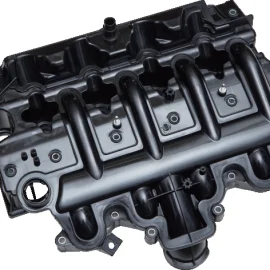
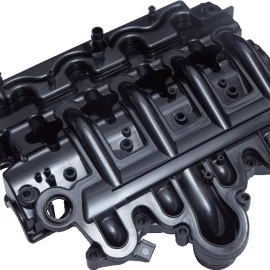
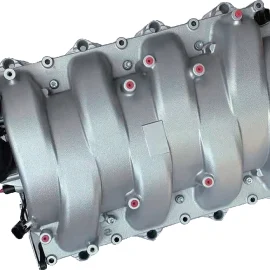
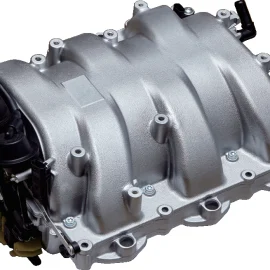
We offer intake manifolds for a variety of brands, such as Mercedes-Benz, BMW, Ford, and more. Click the button to browse and get a free, quick quote.
How to Diagnose a Misfire Caused by Gasket Failure
Visually inspect the intake manifold flange area for dried coolant residue,damp oil stains,or cracks along the edges of the plastic manifold.Then,use a professional smoke machine to precisely detect hidden vacuum leaks by injecting dense smoke into the intake manifold;even the slightest cracks in the gasket will become visible within seconds.
Alternatively,while the engine is idling,spray brake cleaner along the intake manifold gasket seam;if the gasket is damaged,the engine speed will increase or temporarily stabilize.This occurs because the engine draws in the spray,temporarily increasing the air-fuel ratio.
Use a diagnostic scan tool to monitor the fuel trim in real time;a short-term fuel trim value above 15% indicates that unmetered air is entering the engine.Combining the smoke test with scan data allows you to pinpoint the root cause of the misfire.
Diagnostic Test Methods for Intake Gasket Leaks
| Diagnostic Method | Testing Procedure | Positive Leak Result | Reliability Level |
|---|---|---|---|
| Smoke Machine Test | Pump dense smoke into sealed intake plenum | Smoke escapes from intake gasket flange | Extremely High (Gold Standard) |
| Combustible Spray Test | Spray brake cleaner along gasket seam at idle | Engine RPM surges or smoothes out instantly | Moderate (Requires caution near heat) |
| Scan Tool Fuel Trims | Read STFT and LTFT data at idle vs 2,500 RPM | High positive trims at idle that drop at high RPM | High (Confirms unmetered air) |
Practical Solutions to Fix Intake Gasket Leaks
Fixing an engine misfire requires replacing the damaged manifold gasket with high-quality components.
- First,disconnect the negative battery terminal and completely drain the engine coolant.
- Next,mark and disconnect the fuel lines,wiring harnesses,and vacuum hoses connected to the intake manifold.Carefully remove the bolts in a crisscross pattern to prevent the aluminum intake manifold from warping.
- Thoroughly clean the cylinder head mounting surface using a plastic scraper and solvent.Never use a metal wire brush,as deep scratches from the metal can permanently damage the sealing surface of the gasket.
- Install a new multi-layer steel gasket or molded rubber gasket onto the locating pins.Unless otherwise specified,apply specialized RTV silicone sealant only to the designated corner seams of the cylinder head.
- Finally,torque all intake bolts to the exact manufacturer’s specifications in sequence.Correct torque prevents a faulty intake manifold gasket from recurring after reassembly.
Repair Steps, Torque Specs, and Cost Estimates
| Repair Phase | Key Technical Task | Typical Cost (DIY vs Shop) | Critical Precaution |
|---|---|---|---|
| Disassembly & Prep | Remove manifold, clean cylinder head ports | $20 – $40 (Chemical solvents & scrapers) | Cover open intake ports with clean shop rags |
| Gasket Installation | Position multi-layer steel/rubber gasket | $30 – $90 (Replacement gasket set) | Align gasket onto factory alignment dowel pins |
| Final Reassembly | Torque bolts to factory specs (8-18 ft-lbs) | $350 – $850 (Professional shop labor) | Tighten bolts in proper sequence from center out |
Preventing Future Gasket Failures and Engine Misfires
Preventing intake leaks protects your engine from costly internal damage and recurring misfires.
- Replace the engine coolant according to the manufacturer’s recommended maintenance schedule.It is especially important to note that aged,acidic coolant can corrode composite plastic gaskets and aluminum seals over time.
- Replace a failed engine thermostat promptly to prevent the engine from overheating.Severe overheating can cause the intake manifold to warp,which in turn can cause gaskets to be compressed and rupture.
- Also,choose high-quality aftermarket gaskets with a steel core and molded silicone seals,as they withstand thermal expansion better than cheap,low-quality gaskets and virtually eliminate the risk of misfires.
- Finally,keeping the fuel system clean and the coolant fresh ensures the engine’s reliable day-to-day operation.Immediately restore smooth acceleration, clean emissions,and optimal fuel efficiency.
Contact Us Now
- RM901 No.22 Tangjiaqiao Road Wenzhou China
- +86 138 1973 9327
- [email protected]
- https://www.autosparesupplier.com/
Share