
How To Fix Intake Manifold Runner Control Stuck Open?
Fixing an intake manifold with a runner control stuck open requires systematic diagnostic testing and targeted repairs.Modern internal combustion engines use intake valves to optimize airflow at different RPMs;these valves enhance low-RPM torque and high-RPM horsepower by altering the geometry of the intake port.
However,severe carbon buildup and mechanical wear often cause the internal valves to become stuck in a fixed position,so engines with intake manifold control valves stuck in the open position will experience a lack of low-RPM torque.
The powertrain control module will immediately trigger the check engine light to alert the driver to an internal airflow malfunction.Technicians must systematically inspect the vacuum lines,electronic actuators,and internal linkages.
What Causes a Runner Control Stuck Open in Your Intake Manifold?
Severe carbon buildup is the primary cause of intake manifold control valve sticking.In direct-injection engines,fuel is injected directly into the cylinders,so the intake valves cannot be cleaned with solvents.Sticky oil vapor accumulates on the internal manifold flaps over tens of thousands of miles.This black sludge seizes the shaft bearings,causing the runner control to remain permanently stuck in the open position inside the plenum.
In addition,a broken plastic link between the actuator motor and the shaft can cause a mechanical disconnection;a ruptured vacuum hose can hinder the movement of the diaphragm in older vacuum control systems;and a faulty internal coil in the solenoid valve can prevent the return spring from closing the intake flap.These are all causes of runner control stuck open in your intake manifold.
Common Diagnostic Codes for IMRC System Failure
| Fault Code | System Description | Primary Failure Mode |
|---|---|---|
| P2004 | Bank 1 Runner Control Stuck Open | Mechanical binding, carbon buildup |
| P2005 | Bank 2 Runner Control Stuck Open | Broken linkage, solenoid fault |
| P2015 | Runner Position Sensor Range Fault | Worn plastic actuator stop limit |
| P2008 | IMRC Solenoid Control Circuit Open | Electrical wiring harness damage |
Symptoms of an Intake Manifold Runner Control Stuck Open
Driving with an intake manifold runner flap locked open produces distinct performance problems.The driver will notice a complete loss of low-end torque when accelerating from a standstill;the open air dam significantly reduces the air intake velocity at low engine speeds.Inadequate mixing of air and injected fuel results in sluggish throttle response during initial acceleration.However,once the engine speed exceeds 3,500 rpm,engine performance returns to normal.
Excessive airflow disrupts the optimal air-fuel ratio during engine warm-up,causing an unstable idle.Furthermore,unburned fuel enters the exhaust system,significantly reducing fuel economy.Quickly addressing a runner control stuck in the open position prevents potential catalytic converter contamination.
Get A Free Fast Quote
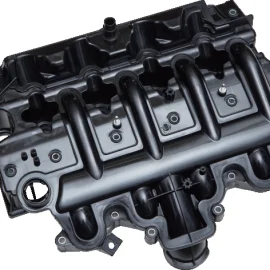
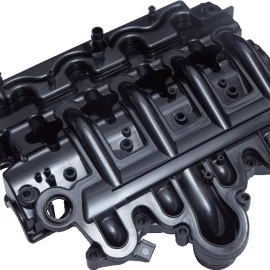
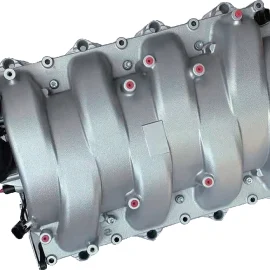
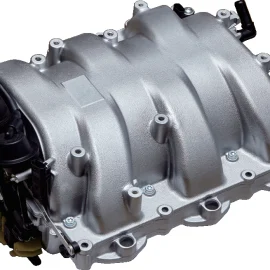
We offer intake manifolds for a variety of brands, such as Mercedes-Benz, BMW, Ford, and more. Click the button to browse and get a free, quick quote.
Diagnostic Steps for Runner Control Stuck Open Issues
- First,connect an OBD-II scanner to read the fault codes from the engine control unit.Check the real-time sensor data to confirm whether the inlet manifold position voltage changes as the throttle opens and closes.
- Next,inspect the mechanical linkage connected to the inlet manifold housing.Manually move the linkage to check whether the shaft rotates smoothly and without resistance.If the shaft is stuck,it indicates severe carbon buildup inside the intake manifold ports,which requires chemical cleaning.
- Use a handheld vacuum pump to test the vacuum actuator directly.If the actuator cannot maintain vacuum pressure,the part must be replaced immediately.
- Finally,check the wiring harness connectors for corrosion,broken locking tabs,or loose terminals.
Diagnostic Inspection Checklist for IMRC Testing
| Inspection Stage | Diagnostic Tool | Target Benchmark | Failure Indication |
|---|---|---|---|
| OBD-II Live Data | Diagnostic Scan Tool | Voltage shifts with RPM change | Static voltage reading |
| Mechanical Linkage | Manual Hand Inspection | Smooth 90° lever rotation | Sticking lever or broken plastic |
| Actuator | Handheld vacuum pump | Holds 15 in-Hg for 60s | Vacuum drops rapidly |
| Electrical Harness | Digital Multimeter | 12 Volts reference at connector | Zero volts or open circuit |
Step-by-Step Solutions to Fix Your Intake Manifold
Resolving a runner control stuck open issue depends entirely on your specific diagnosis.
- First,replace the damaged plastic connecting rod arms with high-strength aluminum aftermarket parts;the aluminum stopper in these parts prevents the plastic gears from rotating beyond their internal limits.
- Next,if carbon buildup is causing the internal flap to stick,clean it manually using walnut shell blasting.Removing the thick carbon buildup will restore smooth movement of the internal flap in the manifold.However,if the internal flap is severely worn or the butterfly valve shaft is broken,the entire inlet manifold assembly will need to be replaced.
- After completing the physical repairs,use an OBD-II scanner to clear all stored diagnostic codes and perform a 20-minute road test to ensure the engine control unit has fully reset the readiness indicator.
Repair Solutions & Cost Comparison
| Repair Method | Primary Root Cause | Average Parts Cost | Labor Time Estimate |
|---|---|---|---|
| Linkage Bracket Repair | Broken plastic stop limit | $15 – $45 | 0.5 – 1.0 Hours |
| IMRC Actuator Replacement | Failed electric motor/solenoid | $80 – $220 | 1.0 – 2.0 Hours |
| Intake Decarbonization | Heavy carbon sludge accumulation | $150 – $350 | 2.0 – 4.0 Hours |
| Full inlet Manifold Assembly | Damaged internal shaft/flaps | $300 – $850 | 3.0 – 5.0 Hours |
Preventing Future Intake Manifold Runner Control Failure
Preventing your intake manifold runner flaps from sticking open requires proactive engine maintenance habits.
- Install a high-efficiency oil-vapor separator in the crankcase PCV recirculation line;this separator will capture oil vapors before they enter and coat the inlet manifold.
- Use high-quality synthetic motor oil to minimize the evaporation of volatile oil vapors at high engine temperatures.
- Perform an intake valve flushing service every 15,000 miles (approximately 24,000 kilometers) to remove soft carbon deposits.
Contact Us Now
- RM901 No.22 Tangjiaqiao Road Wenzhou China
- +86 138 1973 9327
- [email protected]
- https://www.autosparesupplier.com/
Share