
Split VS Integral Rocker Cover:What's The Difference?
Split vs integral rocker cover:what’s the difference?Both designs serve the same fundamental purpose:preventing engine oil leakage.However,their implementation differs significantly.The integral cover is a single-piece structure,while the split-type system utilizes multiple smaller cover plates.This guide will explore which design offers greater reliability and easier maintenance.
Key Takeaways:Quick Comparison
- Integral Cover:One large piece covering all cylinders.Common in passenger cars.
- Split Cover:Separate lids for individual cylinders or pairs.Common in heavy-duty trucks.
- Sealing:Integral covers have fewer leak points.
- Access:Split covers allow easier access to specific engine sections.
Get A Quote Now
What is an Integral Rocker Cover?
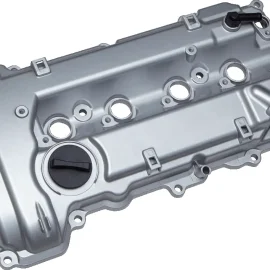
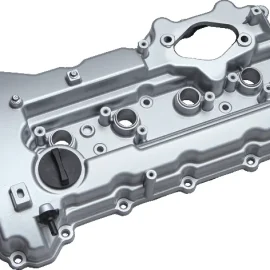
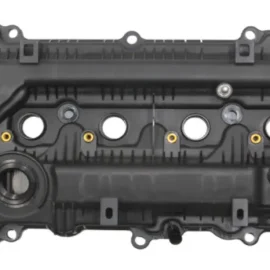
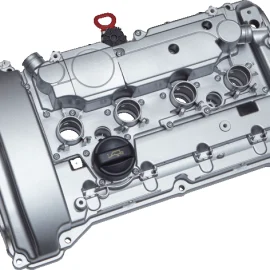
The one-piece rocker cover has become standard equipment on most modern vehicles.It consists of a single cast component that covers the entire cylinder head valve assembly.Nearly all passenger cars,SUVs,and light trucks utilize this design.
The integrated design requires only a single peripheral seal,thereby reducing potential leakage paths.Additionally,it enhances structural rigidity at the top of the engine.However,it is important to note that if cracks appear in the integrated cover plate,the entire component must be replaced;partial repairs are not possible.
What is a Split Rocker Cover?
Split-cover designs are commonly found in heavy machinery.In this system,manufacturers divide the cover plate into multiple independent sections.For example,a six-cylinder engine may feature three separate covers,each protecting two cylinders.
The core advantage of this design lies in its ease of maintenance.Technicians can access and adjust specific valves by removing only a small cover plate,eliminating the need to lift a heavy,single-piece cover.This approach saves time and reduces physical strain during roadside repair operations.
Split VS Integral Rocker Cover:Physical Construction
| Feature | Integral Rocker Cover | Split Rocker Cover |
|---|---|---|
| Component Count | Single Unit | Multiple Units |
| Gasket Type | One large continuous loop | Multiple individual gaskets |
| Weight | Heavy (if metal) / Light (if plastic) | Light individual pieces |
| Bolt Pattern | Perimeter bolts only | Bolts surround each section |
| Typical Material | Plastic Composite or Aluminum | Cast Aluminum or Steel |
Leak Risks and Sealing Performance
Integral Rocker Covers:
Offers exceptional leak prevention.The cylinder chamber features no gaps,with seals positioned only along the outer perimeter.However,deformation risks exist—if the elongated plastic integral cover plate overheats,it may warp.Once warped,significant oil leakage will occur.
Split Rocker Covers:
This type of cover has more potential failure points.Each individual cover is equipped with its own dedicated gasket.The increased number of gaskets raises the risk of oil leakage.However,smaller metal covers rarely deform,featuring a compact design with sufficient thickness and robust durability.Should a leak occur,it typically affects only a localized area,allowing for isolated repair of the leak point without disassembling other engine components.
Split VS Integral Rocker Cover:Maintenance Costs
Replacing gaskets on integral systems typically involves lower parts costs but higher labor expenses.Simply lifting the large cover plate requires disassembling multiple components (hoses, wiring harnesses).
Conversely,split systems enable precise repairs.If cylinder 1’s valve produces abnormal noise,only the corresponding cover needs to be opened to replace an inexpensive small gasket.This characteristic makes the choice between split and integrated rocker covers a key consideration for maintenance technicians—split systems typically have higher upfront manufacturing costs but lower labor costs for subsequent repairs.
| Scenario | Integral System Outcome | Split System Outcome |
|---|---|---|
| Adjusting Valves | Must expose entire valvetrain;High labor | Expose only target valves;Low labor |
| Cracked Cover | Expensive total replacement | Cheap single-section replacement |
| Gasket Cost | Moderate(One large seal) | High(Must buy set of 3-6 seals) |
| Warping Risk | High(Long surface area) | Low(Short surface area) |
Installation Tips: Torque Differences
For Integral Covers:
You must follow a strict “star” or “spiral” pattern.Start from the center bolts and work your way outward.If you tighten one end first,the long cover will warp.A warped integral cover is ruined permanently.
For Split Covers:
These are more forgiving but require even pressure. Tighten the bolts in a crisscross pattern on each individual lid.
- Cleanliness:
Integral covers usually require a dab of RTV sealant at the “T-joints” (where the timing cover meets the head). - Torque:
Split covers on heavy diesels often require higher torque than the fragile plastic integral covers found on cars.Always use a torque wrench,never an impact gun.
Split VS Integral Rocker Cover:Noise and Vibration Control
The integral valve cover functions as a large sound barrier,effectively suppressing the clicking noise from fuel injectors and rocker arms.Modern integral cover plates are typically permanently bonded with acoustic foam.
Split-type covers offer poor sound insulation.Gaps between the covers allow noise leakage.This is why heavy-duty diesel engines often sound louder and more mechanical than passenger car engines.
Summary: Pros and Cons at a Glance
Split Rocker Cover (Heavy Duty)
- Pros:
High durability, easy access to individual cylinders, cheap to replace a single broken section. - Cons:
More potential leak points (more gaskets),heavier material,louder engine noise.
Integral Rocker Cover (Automotive)
- Pros:
Superior sealing (fewer gaps),excellent noise reduction,cleaner engine bay aesthetics. - Cons:
Difficult to access valvetrain,expensive to replace if cracked,prone to warping if overheated.
FAQs on Split and Integral Valve Cover
No.The cylinder head casting determines the bolt hole positions.Split and one-piece valve covers are not interchangeable on the same engine.
It is worth noting that if one section of a split valve cover is damaged,only that section needs to be replaced.However,some repair shops may insist on replacing the entire valve cover.
Yes.Split covers typically use thick molded rubber gaskets.Integral covers may use thin silicone or room-temperature-curing sealant.
Contact Us Now
- RM901 No.22 Tangjiaqiao Road Wenzhou China
- +86 138 1973 9327
- [email protected]
- https://www.autosparesupplier.com/