
Static VS Dynamic Intake Manifold,What's The Difference?
When comparing a static vs dynamic intake manifold,you must understand how engines breathe.The intake manifold delivers air directly to the engine cylinders.More air simply means more combustion power.However,engine speed changes constantly during driving.This creates a complex airflow problem.Engineers invented different manifolds to solve this specific issue.In this guide,we will explore both designs thoroughly.Furthermore,we will help you choose the right setup for your vehicle.
Get A Free Fast Quote
Understanding Static VS Dynamic Intake Manifold Systems
To optimize performance, engineers developed two distinct air delivery methods.Understanding static vs dynamic intake manifold systems is crucial for engine tuning.Let us break down exactly how each system works.
What Is a Static Intake Manifold?
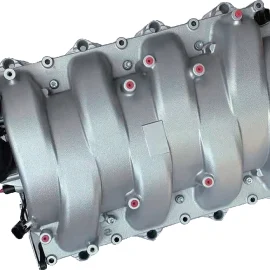
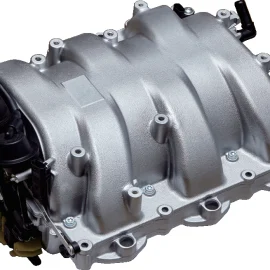
A static intake manifold features fixed runner lengths.The internal tubes never change shape or size.Therefore,it only performs perfectly at one specific engine speed.Short runners favor high RPM horsepower.Conversely,long runners build excellent low RPM torque.You cannot have both benefits simultaneously.
What Is a Dynamic Intake Manifold?
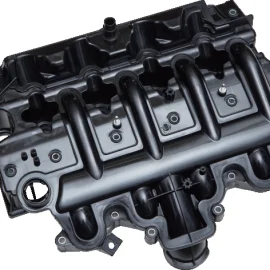
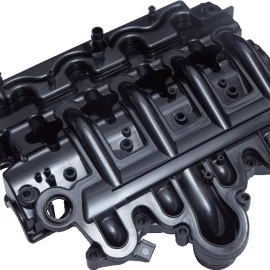
A dynamic intake manifold physically changes its internal geometry.It uses electronic valves to alter the runner length.At low RPM,air travels through a long path.This boosts your taking-off torque.At high RPM,a valve opens rapidly.The air then takes a much shorter path.This maximizes high-end horsepower easily.Consequently,you get the absolute best of both worlds.
Core Mechanical Differences
| Feature | Static Manifold | Dynamic Manifold |
|---|---|---|
| Runner Length | Fixed permanently | Variable via valves |
| Moving Parts | None | Butterfly valves & actuators |
| Power Delivery | Narrow RPM band | Broad, flat torque curve |
| Complexity | Very low | Very high |
The Purpose Behind Static VS Dynamic Intake Manifold Designs
Why did automotive engineers create these two distinct systems?The static vs dynamic intake manifold debate revolves entirely around “volumetric efficiency.”
Solving the Airflow Problem
Air possesses mass and momentum.When engine valves open and close,air creates pressure waves.If you time these waves perfectly,air forces itself inside.This creates a natural,free supercharging effect.A static design only times these waves perfectly at one specific RPM.Therefore,you lose potential power at other engine speeds.A dynamic design adjusts to match the engine speed constantly.Thus,it maintains perfect wave timing across the entire rev range.
Historical Problem Solving
| Era | Primary Problem | Engineering Solution |
|---|---|---|
| 1960s | Poor low-end torque in race cars | Long-runner static manifolds |
| 1980s | Need for both torque and high RPM power | Early mechanical dynamic manifolds |
| Modern | Strict emissions and high power demands | Electronic dynamic manifolds |
Pros and Cons of static vs dynamic intake manifold Setup
Every mechanical design involves compromises and trade-offs.You must weigh the static vs dynamic intake manifold pros and cons carefully.
Advantages and Disadvantages
Static manifolds are incredibly reliable and durable.They have absolutely no internal moving parts to break.Furthermore,they are very cheap to produce and replace.However,they offer a very narrow power band.
Dynamic manifolds improve daily drivability significantly.They provide massive torque at traffic lights.Yet,they are highly complex and expensive.The internal butterfly valves can fail over time.Carbon buildup can also jam the moving components permanently.
Pros and Cons Comparison
| System Type | Major Advantages | Major Disadvantages |
|---|---|---|
| Static | Highly reliable, cheap, great for racing | Poor flexibility, weak at certain RPMs |
| Dynamic | Excellent daily driving, broad power band | Expensive repairs, prone to carbon buildup |
Use Cases for Static VS Dynamic Intake Manifold Choices
Choosing a static vs dynamic intake manifold dictates your daily driving experience.Let us look at the most common applications for each.
Race cars usually utilize static manifolds exclusively.They operate near the redline constantly on the track.Therefore,they only need short runners for maximum horsepower.Daily driven commuter cars benefit greatly from dynamic manifolds.You need low-end torque for stop-and-go city driving.You also need high-end power for highway passing.Modern sports cars almost exclusively use dynamic systems today.This allows them to pass emissions while delivering massive,smooth power.
Contact Us Now
- RM901 No.22 Tangjiaqiao Road Wenzhou China
- +86 138 1973 9327
- [email protected]
- https://www.autosparesupplier.com/