
Why Are There Water Droplets Inside The Rocker Cover?
Finding water droplets on the underside of your rocker cover is a frequent concern for vehicle owners.It often looks alarming,but it does not always indicate a catastrophic failure.In many cases,this moisture is simply condensation caused by weather or driving habits.However,under specific conditions,it can signal a serious issue like a blown head gasket.
Key Takeaways:Is It Serious?
- Clear Moisture:Usually normal condensation from short trips.
- Milky Sludge:Indicates coolant mixing with oil (Serious).
- Weather Impact:More common in winter or humid climates.
- Quick Fix:A long highway drive often evaporates the moisture.
Get A Quote Now
The Science Behind Water Droplets on the Rocker Cover
The primary cause of this moisture is the temperature difference.Your engine gets very hot while running.When you park,the metal cools down.
During this cooling process,the air inside the engine contracts.This draws in cool,humid air from outside.When this damp air touches the cooling metal parts,it condenses.This forms droplets on the valve cover and the oil filler cap.
If you drive long distances,the engine gets hot enough to boil this water.The vapor then exits through the ventilation system.However,if you only drive short distances,the engine never reaches operating temperature.The water remains trapped.Over time,these droplets accumulate on the valve cover.
Distinguishing Condensation from Coolant Leaks
You must determine if the liquid is water or antifreeze.A coolant leak is fatal to an engine.Condensation is usually manageable.
Condensation Signs:The liquid looks like clear water or a light yellow “mayonnaise” slime.It is usually found only on the oil cap or the top of the valve cover.The oil on the dipstick looks normal and clean.
Coolant Leak Signs:The oil looks like chocolate milk or a thick milkshake throughout the engine.The coolant level in the reservoir is dropping.You might smell a sweet,syrupy odor from the exhaust.This indicates a blown head gasket or a cracked block.
| Feature | Normal Condensation | Coolant Leak (Head Gasket) |
|---|---|---|
| Appearance | Clear drops or light yellow sludge | Thick, creamy, brown/white milkshake |
| Location | Only on Cap or Rocker Cover | Throughout engine and on dipstick |
| Coolant Level | Stable (No loss) | Dropping consistently |
| Exhaust Smoke | Normal (White steam vanishes quickly) | Thick white smoke (Sweet smell) |
| Engine Temp | Normal | Overheating frequently |
Pro Tip: The "Sizzle Test" for Hidden Water
- Extract Oil:Pull the dipstick and get a drop of oil.
- Heat Metal:Heat a spoon or a piece of sheet metal with a lighter.
- Drop the Oil:Place the oil drop on the hot metal.
- Listen:
- Silent Smoke:If it smokes silently,it is pure oil.
- Crackling/Sizzling:If it creates a “fryer” sound (Tschhh!),there is hidden water.
The Role of the PCV System and Rocker Cover
The positive crankcase ventilation (PCV) system is your engine’s dehumidifier.It circulates fresh air through the engine block to remove vapors.
If the PCV valve is clogged,moisture cannot escape.It gets trapped inside the crankcase.Consequently,you will see excessive droplets forming on the rocker cover.A bad PCV valve exacerbates condensation issues significantly.
Checking this valve is simple.Shake it.If it rattles,it is usually good.If it is solid,it is clogged with sludge.Replacing this cheap part often solves moisture issues under the valve cover.
The Effect of Material on Condensate Production
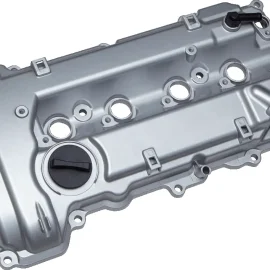
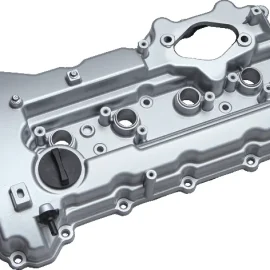
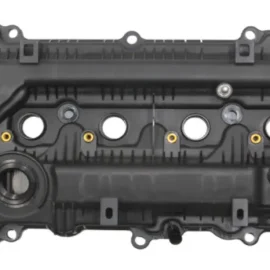
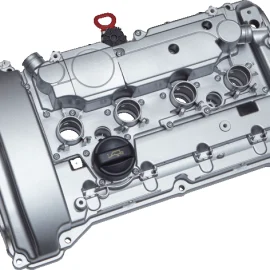
The material of your valve cover influences the amount of condensation.Modern cars often use composite plastic covers.Older cars use aluminum or steel.
Plastic Rocker Covers:Plastic does not retain heat well.It cools down instantly when you turn off the engine.However,the internal engine block stays hot.This rapid temperature difference attracts moisture faster.Therefore,cars with plastic covers often show more droplets than those with metal covers.
Aluminum Rocker Covers:Aluminum retains heat longer.It cools down slowly along with the rest of the engine.This slower cooling process reduces the “shock” that creates heavy condensation.
Will Water Droplets Damage the Engine?
Small amounts of surface moisture are generally harmless. However, chronic accumulation causes problems.
1. Rust Formation:
Internal engine parts are made of steel.Water causes steel to rust.If water sit on the valve cover or valve springs,corrosion begins.This leads to pitted metal and weak components.
2. Acidic Oil:
Water mixes with sulfur byproducts in the oil.This creates acids.These acids eat away at bearings and seals.
3. Lubrication Failure:
Oil floats on water.If there is too much water,the oil pump might pick up water instead of oil.Water cannot lubricate bearings.This leads to metal-on-metal contact and rapid engine wear.
How to Remove Water Droplets from the Rocker Cover
If you confirm the issue is just condensation,the fix is free.You need to “cook” the moisture out.
The “Italian Tune-Up”:Take your car for a long drive.Drive at highway speeds for at least 30 to 45 minutes.This sustains high oil temperatures.The heat evaporates the water from the rocker cover.The PCV system then sucks the vapor out.
How to Remove Water Droplets from the Rocker Cover
| Symptom Observation | Recommended Action | Urgency |
|---|---|---|
| Clear droplets on cap only | Drive the car for 30+ minutes on the highway. | Low |
| Yellow slime on cap (Winter) | Clean the cap and check the PCV valve. | Low |
| Milky oil on dipstick | Stop driving. Tow to a mechanic immediately. | Critical |
| Sweet smell from exhaust | Pressure test the cooling system. | High |
| Droplets persist after long drive | Inspect rocker cover gasket and PCV hose. | Medium |
Preventing Moisture Buildup
- Avoid Short Hops:Try to combine errands.One long trip is better than five short ones.
- Check the PCV:Replace the valve every 30,000 to 50,000 miles.
- Winter Care:Allow the engine to run a bit longer in freezing temperatures.
- Inspect Seals:Ensure the gasket is tight.A loose gasket can let rain or wash water enter the engine.
FAQs About Rocker Cover Moisture
This is the most common form of condensation.Cold outside air meets hot engine oil.It forms an emulsion of oil and water droplets.It is usually harmless if the dipstick is clean.
Yes.If you pressure wash the engine bay,water can force its way past old seals.Be careful when spraying near the top of the engine.
Synthetic oil handles moisture better than conventional oil.However,it cannot prevent condensation physics.You still need to drive the car long enough to evaporate the water.
Contact Us Now
- RM901 No.22 Tangjiaqiao Road Wenzhou China
- +86 138 1973 9327
- [email protected]
- https://www.autosparesupplier.com/