
Plastic vs Aluminum Intake Manifold : Is it similar to valve covers?
The debate over plastic vs aluminum intake manifold materials is crucial for engine performance.Yes,the differences are very similar to those seen in engine valve covers.The choice of material affects cost,heat management,and durability.
The Core Function and Material Choice
The intake manifold is the engine’s air highway.It distributes air evenly to the cylinders.Manufacturers choose materials based on cost and heat.Modern engines prefer plastic for its low weight.Performance engines often prefer aluminum for strength.
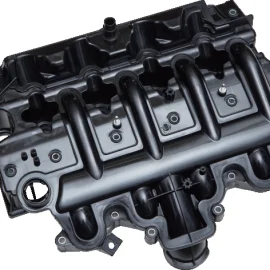
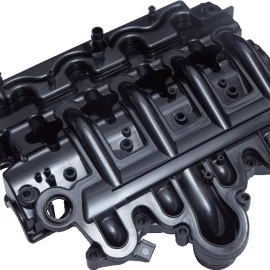
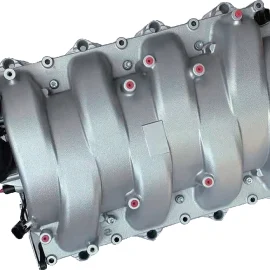
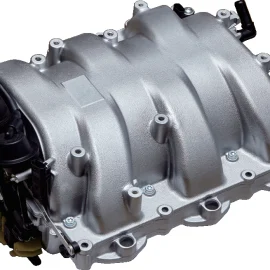
Plastic vs Aluminum Intake Manifold : Direct Comparison
| Feature | Plastic/Composite Manifold | Aluminum/Metal Manifold |
|---|---|---|
| Weight | Extremely light | Heavier, durable |
| Heat Transfer | Poor insulator (Keeps air hot) | Excellent conductor (Keeps air cool) |
| Durability | Prone to cracking/warping | Highly rigid, resists heat damage |
| Airflow Smoothness | Very smooth internal finish | Rougher internal texture |
| Cost | Lower manufacturing cost | Higher cost and resale value |
Why Manifolds Fail and the Material Impact
Plastic Failure:
Plastic manifolds can crack from heat cycles.They are very sensitive to overtightening bolts.This often causes an vacuum leak.You must avoid driving with a damaged inlet manifold.Aluminum Failure:
Aluminum is prone to gasket failure.The metal itself rarely cracks.However,corrosion can be a serious issue over time.It can also strip bolt threads if mismanaged.
Performance and Maintenance Considerations
| Maintenance Factor | Aluminum (The Advantage) | Plastic (The Challenge) |
|---|---|---|
| Carbon Buildup | Less severe (Due to heat) | More severe (Cool air condenses oil) |
| Leak Risk | Gasket failure only | Manifold body failure |
| Cleaning | Easier access | Often requires full replacement |
| Longevity | Excellent lifespan | Limited by heat cycles |
When to Choose Plastic Ones
A plastic intake manifold is standard for most modern daily drivers.
It is more than adequate for stock engines and everyday use.
Plastic is significantly lighter than aluminum,contributing to better fuel economy and handling.
Plastic acts as a poor conductor,meaning it doesn’t transfer engine heat to the intake air as quickly as metal,potentially keeping intake air cooler during standard operation.
These are generally much cheaper to manufacture and replace if they fail.
Injection molding allows for intricate internal shapes and smoother finishes that can optimize airflow more easily than traditional casting.
When to Choose Aluminum Ones
A aluminum intake manifold is the preferred choice for performance builds, heavy-duty applications, or replacing failing plastic units.
Unlike plastic, aluminum will not “balloon,” crack,or explode under high turbo or supercharger boost pressures.
Aluminum resists warping and cracking caused by the extreme thermal cycling common in trucks used for towing or high-performance racing.
It virtually eliminates the risk of manifold body failure (cracks/leaks) that eventually affects plastic after years of heat cycles.
Aluminum manifolds can withstand harsh chemical cleaning or “dipping” to remove heavy carbon buildup,which would damage plastic.
Billet or cast aluminum can be precision-machined or “ported” to match specific high-performance cylinder heads and powerband goals.
Contact Us Now
- RM901 No.22 Tangjiaqiao Road Wenzhou China
- +86 138 1973 9327
- [email protected]
- https://www.autosparesupplier.com/